PANAF 2027

Lusaka: EACC Ordinary Meeting

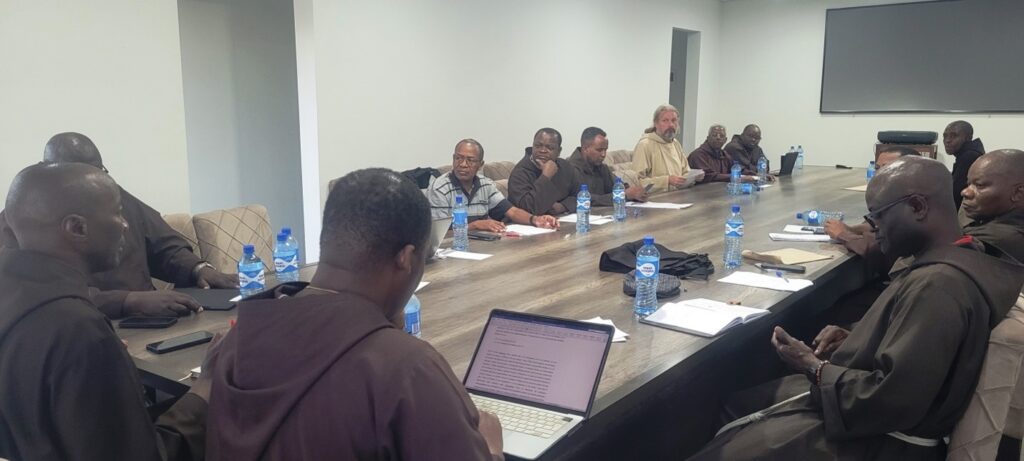
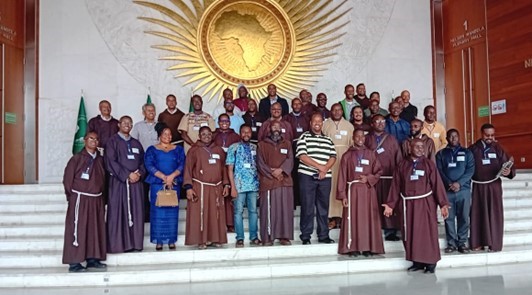
Lusaka, Zambia – May 25, 2026: The East Africa Conference of Capuchins (EACC) successfully held its Plenary Meeting on May 25, 2026, at Laverna Formation House in Lusaka, Zambia. The one-day meeting brought together participants from across the conference to review ongoing initiatives, assess progress, and make key decisions regarding the future of the Order within the region. Br. Worku Demeke, OFMCap. (CAMSA SECRETARY) The day commenced at 6:15 a.m. with the praying of the Angelus and a period of meditation, followed by the celebration of the Holy Eucharist. The plenary session officially began at 8:30 a.m. and continued until 6:00 p.m., providing ample time for thorough deliberation on all agenda items. Among the key matters discussed were the reading and approval of the minutes from the previous meeting, progress reports from the circumscriptions, updates on the preparation of the Ratio Formationis Localis for EACC, issues arising from PANAF, the election of delegates to the Ninth Plenary Council of the Order (IX PCO), common formation houses within EACC, JPIC initiatives, conference subscriptions, and the pursuit of self-sustainability. Participants expressed satisfaction with the overall situation across the circumscriptions, noting that the brothers are carrying out their ministries effectively and that no major difficulties were reported. However, concern was raised regarding xenophobia-related challenges in South Africa, which continue to complicate visa applications and renewals for some brothers. The meeting also received an encouraging report on the preparation of the Ratio Formationis Localis. While progress is being made, participants acknowledged that the process remains behind schedule and emphasized the importance of providing support whenever the drafting team seeks collaboration. Regarding PANAF, the assembly recognized positive developments but noted that delays in receiving requested information remain a challenge. Participants expressed hope that the recent letter from the General Minister will encourage more timely responses and agreed that Major Superiors should continue motivating the brothers to participate actively in the process. A significant milestone of the meeting was the successful election of four EACC delegates who will represent the Conference at the Ninth Plenary Council of the Order (IX PCO). Their names have been officially submitted to the General Secretary. In the area of formation, the participants designated Lusaka and Addis Ababa as common centres for philosophy formation, while Nairobi, Morogoro, and Kampala were confirmed as common centres for theology formation. These decisions aim to strengthen collaboration and ensure quality formation throughout the Conference. The assembly also reviewed the EACC Justice, Peace and Integrity of Creation (JPIC) report and approved a proposal to convene a JPIC meeting in Nairobi in May 2027. Discussions on self-sustainability highlighted the commendable efforts being undertaken by individual circumscriptions. Nevertheless, participants acknowledged that considerable work remains before full financial self-sufficiency can be achieved. The meeting concluded with a shared commitment to intensify efforts toward sustainable development and resource management. Following a productive day of reflection, dialogue, and decision-making, the plenary meeting was formally adjourned at 6:00 p.m. on May 25, 2026.

Lusaka: EACC Ordinary Meeting Read More »
PANAF: Strengthening Capuchin Identity and Mission in Africa”

«The Pan-African Capuchin Congress (PACC) serves as a convoking of prominent Capuchin superiors from Africa and Madagascar, alongside the General Minister and his Councilors, to reflect on the experiences of the Capuchin Friars in Africa». BR. Worku Demeke, OFMCap. The main purpose of the Congress is to strengthen the Capuchin identity within Africa by fostering the human and fraternal connections that underpin their existence, which include formation, mission, economic stewardship, and collaborative witness in partnership with local Churches and the global community. As of now, PACC has taken place five times, with the sixth congress planned to be held at St Francis friary in Addis Ababa, Ethiopia, from February 1 to 6, 2027. Normally, the Congress is organized in one of the African countries, as determined by the General Minister and his councilors. The General Minister is responsible for convening and presiding over the Congress. The five previous congresses have been held in the following nations: It is clear that a multitude of issues have been addressed in all these Congresses, resulting in various directives intended to influence the life and mission of the Capuchins in Africa. However, the resolutions made during the second and fifth PACCs hold particular importance. At the second Congress, it was decided that the Capuchins in Africa ought to be organized and coordinated in a more cohesive manner rather than being divided into smaller factions. Consequently, the previous associations, which consisted of two in East Africa and two in West Africa, have been dissolved, leading to the establishment of two new conferences, namely EACC and CONCAO. Additionally, during the fifth PACC, both conferences came to an agreement to form an assembly referred to as the Capuchin Assembly of Major Superiors of Africa, with the aim: When we concentrate on the VI PACC, the moto of the congress is “LET US START AGAIN”, a phrase used by St. Francis of Assisi to teach his followers that the spiritual life is a continuous journey rather than a destination, and no one should satisfied with his spiritual progress and exposed to pried. The topics that will be addressed in this congress consist of six: The Capuchin Assembly of major superiors in Africa has developed a strategic framework aimed at effectively addressing these issues, ensuring that the congress yields significant results. This strategic framework is organized into three primary timelines: which are the pre-celebration timeline, the celebration timeline, and the post-celebration timeline. To ensure the effectiveness and impact of the congress, the participation of every individual brother is essential. Accordingly, as of January 20, 2026, all Capuchins operating in Africa are involved in a range of activities. These include reflecting on the questionnaires of the baseline assessment, contributing to the writing of articles related to the topics, being updated about the progress made by the preparatory commission, and engaging in prayer for the success of the VI PACC, among others. Consequently, to facilitate this, the assembly has established a webpage at the domain https://www.camsafrica.org/. Additionally, it utilizes social media platforms such as WhatsApp, WhatsApp channel, YouTube, Twitter, and others. The anticipated number of participants includes 100 brothers along with a potential 30 invited guests. Therefore, the total expected attendance is approximately 130.

PANAF: Strengthening Capuchin Identity and Mission in Africa” Read More »

Leo XIV in Africa: Angolan Franciscan Family stands in solidarity

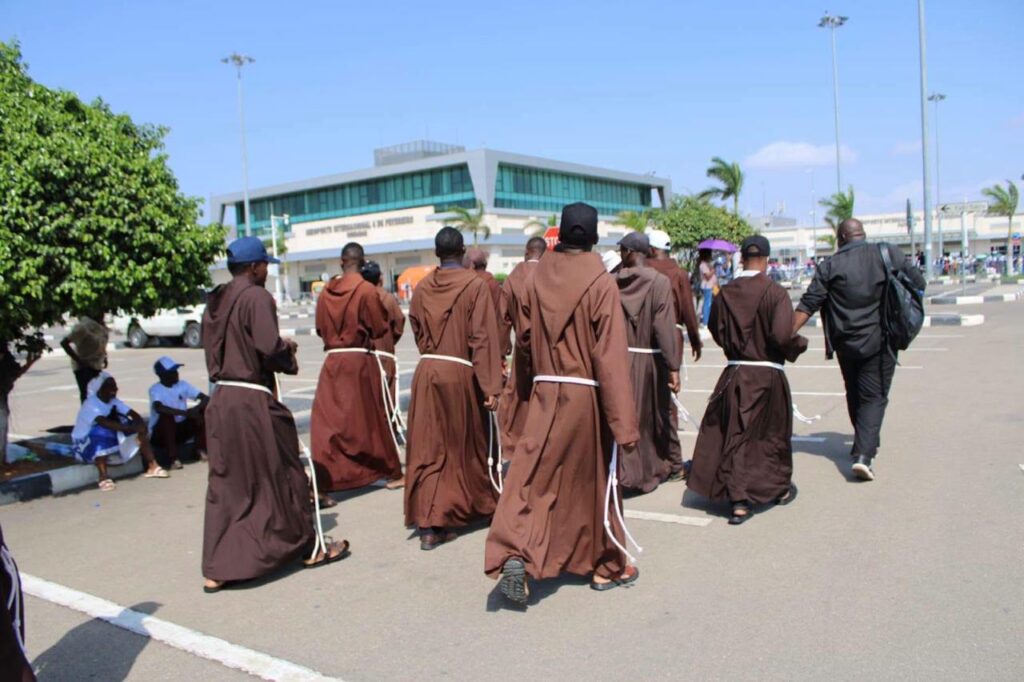
Br Elvis Gwangwava OFM Cap, CAMSA Correspondent | Bulawayo | Zimbabwe The dusty air of Luanda was charged with a rare, electric joy this past weekend as thousands gathered to witness a moment of profound spiritual history. As the “4 de Fevereiro” International Airport tarmac shimmered under the Angolan sun, the Church in Africa stood tall to welcome Pope Leo XVI. Amidst the sea of waving flags and vibrant traditional textiles, a distinct sight caught the eye of every observer: the humble, chestnut-brown habits of the Capuchin brothers and the diverse members of the Franciscan family. Their presence was not merely a ceremonial duty; it was a living testament to the unwavering support the friars hold for the Holy Father and the universal mission of the Church. A Journey of Peace Across the Continent Pope Leo XVI’s arrival in Angola on April 18th marks a pivotal chapter in his 10-day Apostolic Journey to Africa. Having started his mission on April 13th, the Holy Father has already walked with the faithful in Algeria and Cameroon. From here, he will travel to Equatorial Guinea, concluding his historic tour on April 23rd. In Luanda, the Pope was greeted by President João Lourenço and a chorus of voices that seemed to shake the very foundations of the city. But for the Franciscan family, the visit holds a deeper, more fraternal significance. The Franciscan Heart in the Crowd In the photos captured throughout the day, the friars are seen standing in solidarity with the laity—men and women whose lives are often touched by the Capuchins’ grassroots ministry. Whether standing behind security barriers or walking in procession toward the airport, the friars’ “minority”—their commitment to being small and among the people—was on full display. Why This Presence Matters The gesture of the Capuchins and the wider Franciscan family is a powerful symbol of ecclesial communion. In a world often fractured by division, the sight of the friars waiting for hours to catch a glimpse of the Pope serves as a reminder of the Franciscan vow of obedience and their historical role as defenders of the Papacy. Their presence signifies: Looking Ahead The Holy Father remained in Angola until April 21st, with his schedule including a highly anticipated meeting at the Our Lady of Fatima Parish—a site deeply connected to the Capuchin heritage in the region. As Pope Leo XVI continues his journey toward Equatorial Guinea, he leaves behind an Angolan Church revitalized by his presence. And as always, walking quietly but firmly beside him, are the friars—the brown-robed guardians of a faith that remains as vibrant and resilient as the Angolan soil itself.

Leo XIV in Africa: Angolan Franciscan Family stands in solidarity Read More »

ANNALS OF THE PAN-AFRICAN CAPUCHIN CONGRESS

A RETROSPECTIVE AND PROSPECTIVE VIEW | BR. WORKU DEMEKE, OFMCAP. | PROVINCIAL MINISTER OF ETHIOPIA | CAMSA SECRETARY INTRODUCTION The piece entitled Annals of the Pan-African Capuchin Congress (PACC) provides both a retrospective and prospective view on the Pan-African Capuchin initiative, with the aim of clarifying terminological ambiguities, historical context, and assessing certain progress made. It is my belief that individuals who have had the opportunity to read various documents related to this initiative or papers presented during the celebration can grasp the meaning of terminological ambiguities. In some instances, it is referred to as a conference, while in others it is called an assembly, a meeting, or a congress. Another issue arises from the confusion regarding the frequency and locations of its occurrences. Even if it is not inherently confusing, many individuals do not have a clear understanding of the initiative’s objectives as well.  Therefore, the primary aim of this article is to clarify both the terminological and historical confusions, as well as to communicate the purpose of the initiative. Additionally, it seeks to analyze some of the topics discussed in various congresses to enhance understanding of the challenges faced by Capuchins who live in Africa. The article is structured into four main sections: Semantics, The Purpose and the Chronicles, Relevant Topics, and the Strategic Framework of the 6th Pan-African Capuchin Congress. 1. SEMANTICS Before delving into the specifics, it may be beneficial to begin with the essential semantic terms, namely “PAN” and “Congress”. It is quite prevalent to encounter the prefix “Pan-” in various spheres such as economics, politics, social issues, religion, and others. This prefix, which originates from Greek, signifies “all,” “every,” or “inclusive of everything.” When it is paired with geographical or cultural descriptors like “African” or “American,” it characterizes movements, ideologies, or organizations that aim to unify, connect, or represent a particular group across national, continental, or global frontiers. Regarding the term “Congress,” the first observation is that it is often used interchangeably with terms such as assembly, conference, and meeting. This leads to the immediate inquiry: are these terms synonymous? The Merriam-Webster dictionary clarifies that the term congress denotes a formal, periodic assembly of representatives or experts from constituent organizations, institutions, or courts, among others, for the purpose of discussion and typically action on a specific issue; whereas assembly generally refers to a legislative body or a gathering aimed at a particular, often legislative, objective. Conference is typically a less formal, often theme-oriented gathering intended for knowledge sharing; while meeting serves as the broadest term for smaller, shorter gatherings. When discussing our Pan-African Capuchin initiative, some individuals refer to it as a meeting, while others call it an assembly others as a congress again others as a conference. I believe it is more appropriate to use the term “congress” for three reasons. Firstly, in a letter dated June 24, 1997, which announces the establishment of the EACC (Pro. No. 0046), General Minister John Coriveau employed the term “congress” to describe the second Pan-African gathering that took place in Pretoria, South Africa, in December 1996. Since this term is already present in one of our official institutional documents, it is advisable to continue its usage. Secondly, we currently have two established structures, namely the EACC and CONCAO, which are designated as conferences. Additionally, during the fifth Pan-African Capuchin Congress held from November 7-10, 2016, in Abidjan, Ivory Coast, a new initiative was introduced that unites all Capuchins in Africa under the title Capuchins Assembly of Major Superiors of Africa (CAMSA). The existence of these two terminologies leads to potential confusion if we replicate them. Lastly, if we limit ourselves to just two terms, “congress” and “meeting”, the term that is more fitting would be “congress”, as it signifies a formal, periodic assembly of representatives of all Capuchins in Africa for the purpose of discussion and decision-making on various issues, rather than “meeting”, which implies smaller, shorter gatherings. Therefore, the initiative needs to be called Pan-African Capuchin Congress (PACC). 2. THE PURPOSE AND THE CHRONICLES When we delve into the specifics, the initial aspect that emerges is the significance of the term Pan-African Capuchin Congress (PACC), which is the gathering of all major Capuchin superiors from Africa and Madagascar. The event allows them to spend a week in the company of the General Minister and his Council, reflecting on the lives of the Capuchin Friars Minor in Africa. The aim is to enhance the Capuchin identity by nurturing human and fraternal bonds that form their life, formation, mission, economic stewardship, and collaborative witness in conjunction with local Churches and the broader world. To date, PACC has been held five times, with the sixth scheduled to occur at St Francis friary in Addis Ababa, Ethiopia, from February 1 to 6, 2027. Usually, PACC is hosted in one of the African nations, based on the decision of the General Minister and his councilors. The General Minister convenes the PACC and presides over it. To date, the Capuchins in Africa have conducted six PACCs, which are as follows: It is evident that numerous issues have been discussed in all these PACCs, leading to various directives aimed at shaping the life and mission of the Capuchins in Africa. Nevertheless, the decisions made during the second and fifth PACCs are particularly significant. At the second PACC, it was agreed that the Capuchins in Africa should be organized and coordinated in a more united manner instead of being fragmented into smaller groups. As a result, the previous associations ASMAC (Central African Republic, Chad and Zaire), CAOC (Angola, Cape Verde, Ivory Coast, Cameroon, Nigeria, Benin and Equatorial Guinea), NEACA (Eritrea, Ethiopia and Djibouti) and SEACA (Tanzania, Madagascar, South Africa, Zambia, Kenya, Mozambique, Seychelles, Malawi, Uganda and Zimbabwe) have been dissolved, and two new conferences, namely EACC and CONCAO, have been established. Furthermore, during the fifth PACC, both conferences reached an agreement to create an assembly known as the Capuchin Assembly of Major Superiors of Africa, aimed at enhancing communication and collaboration at

ANNALS OF THE PAN-AFRICAN CAPUCHIN CONGRESS Read More »

TOWARDS PANAF 2027: CAPUCHINS IN AFRICA PREPARE FOR A HISTORIC CONGRESS

«We hope the Congress will mark a historic milestone in the way we conceive our mission and charism among the beloved faithful of Africa.» Br. Agostinho Augusto, OFMCap. From 1 to 6 February 2027, the Friars Minor Capuchins in Africa will host the Pan-African Congress in Addis Ababa, Ethiopia. The Congress, which is expected to contribute to the “future journey of the Capuchins” in Africa and to “become a significant moment for the animation of other parts of the world,” has already begun to resonate strongly in various circumscriptions across the continent, with initial preparations already underway. Following the convocation of the Pan-African meeting by the General Minister, Br. Roberto Genuin, on 20 January 2026, CAMSA gathered to outline the major steps to be taken towards the celebration of the Pan-African Congress. In a letter addressed to all the brothers in Africa, the CAMSA President, Br. Arnold Shirima, stated that the Commission has so far been engaged in “approving the budget, authorizing the final version of the logo, the prayer, the timetable, and the questionnaires prepared by the resource personnel.” Alongside this work, both the Commission and the Assembly have been working on establishing timelines for the distribution of the questionnaires, the collection of feedback, the compilation and summarization of responses, and their submission to the resource personnel. So far, the various circumscriptions in Africa are working on their responses to the questionnaires, which are expected to be submitted to the Commission by 30 April 2026. In the meantime, a Communication Commission, composed of five brothers, is working tirelessly to gather information from across the circumscriptions, produce multimedia content, and publish all relevant information on the CAMSA website (www.camsafrica.org) and other African social media platforms created specifically for the Pan-African meeting and other related events to come. Currently, the Communication team is focused on providing information to all the brothers and engaging, in particular, the houses of formation scattered across the vast continent. The aim is to encourage the involvement of many young brothers and challenge them to contribute with articles, videos, and other content useful for promoting the event among the friars. As Br. Agostinho Augusto, Communication Director, puts it: “Our aim is to ensure that no brother remains unaware or left behind with regard to participation in this important event among the Capuchins in Africa, which we hope will mark a historic milestone in the way we conceive our mission and charism among the beloved faithful of Africa.” Regarding the timeline established by the Assembly, some circumscriptions have already begun submitting their responses to the relevant Commission, while others are still in progress. Although there are challenges related to communication, efforts are being made at both the CAMSA and Commission levels to overcome these obstacles and ensure a smooth flow of information and work.

TOWARDS PANAF 2027: CAPUCHINS IN AFRICA PREPARE FOR A HISTORIC CONGRESS Read More »