
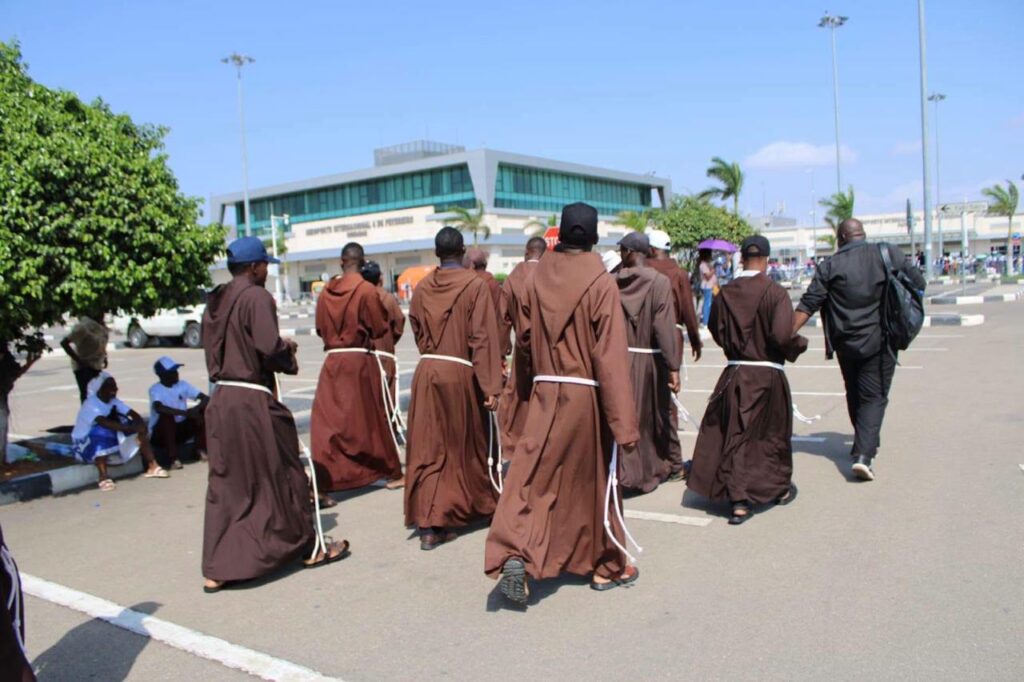
A RETROSPECTIVE AND PROSPECTIVE VIEW |
BR. WORKU DEMEKE, OFMCAP. | PROVINCIAL MINISTER OF ETHIOPIA | CAMSA SECRETARY
INTRODUCTION
The piece entitled Annals of the Pan-African Capuchin Congress (PACC) provides both a retrospective and prospective view on the Pan-African Capuchin initiative, with the aim of clarifying terminological ambiguities, historical context, and assessing certain progress made. It is my belief that individuals who have had the opportunity to read various documents related to this initiative or papers presented during the celebration can grasp the meaning of terminological ambiguities. In some instances, it is referred to as a conference, while in others it is called an assembly, a meeting, or a congress. Another issue arises from the confusion regarding the frequency and locations of its occurrences. Even if it is not inherently confusing, many individuals do not have a clear understanding of the initiative’s objectives as well.
Therefore, the primary aim of this article is to clarify both the terminological and historical confusions, as well as to communicate the purpose of the initiative. Additionally, it seeks to analyze some of the topics discussed in various congresses to enhance understanding of the challenges faced by Capuchins who live in Africa. The article is structured into four main sections: Semantics, The Purpose and the Chronicles, Relevant Topics, and the Strategic Framework of the 6th Pan-African Capuchin Congress.
1. SEMANTICS
Before delving into the specifics, it may be beneficial to begin with the essential semantic terms, namely “PAN” and “Congress”. It is quite prevalent to encounter the prefix “Pan-” in various spheres such as economics, politics, social issues, religion, and others. This prefix, which originates from Greek, signifies “all,” “every,” or “inclusive of everything.” When it is paired with geographical or cultural descriptors like “African” or “American,” it characterizes movements, ideologies, or organizations that aim to unify, connect, or represent a particular group across national, continental, or global frontiers. Regarding the term “Congress,” the first observation is that it is often used interchangeably with terms such as assembly, conference, and meeting. This leads to the immediate inquiry: are these terms synonymous? The Merriam-Webster dictionary clarifies that the term congress denotes a formal, periodic assembly of representatives or experts from constituent organizations, institutions, or courts, among others, for the purpose of discussion and typically action on a specific issue; whereas assembly generally refers to a legislative body or a gathering aimed at a particular, often legislative, objective. Conference is typically a less formal, often theme-oriented gathering intended for knowledge sharing; while meeting serves as the broadest term for smaller, shorter gatherings.
When discussing our Pan-African Capuchin initiative, some individuals refer to it as a meeting, while others call it an assembly others as a congress again others as a conference. I believe it is more appropriate to use the term “congress” for three reasons. Firstly, in a letter dated June 24, 1997, which announces the establishment of the EACC (Pro. No. 0046), General Minister John Coriveau employed the term “congress” to describe the second Pan-African gathering that took place in Pretoria, South Africa, in December 1996. Since this term is already present in one of our official institutional documents, it is advisable to continue its usage. Secondly, we currently have two established structures, namely the EACC and CONCAO, which are designated as conferences. Additionally, during the fifth Pan-African Capuchin Congress held from November 7-10, 2016, in Abidjan, Ivory Coast, a new initiative was introduced that unites all Capuchins in Africa under the title Capuchins Assembly of Major Superiors of Africa (CAMSA). The existence of these two terminologies leads to potential confusion if we replicate them. Lastly, if we limit ourselves to just two terms, “congress” and “meeting”, the term that is more fitting would be “congress”, as it signifies a formal, periodic assembly of representatives of all Capuchins in Africa for the purpose of discussion and decision-making on various issues, rather than “meeting”, which implies smaller, shorter gatherings. Therefore, the initiative needs to be called Pan-African Capuchin Congress (PACC).
2. THE PURPOSE AND THE CHRONICLES
When we delve into the specifics, the initial aspect that emerges is the significance of the term Pan-African Capuchin Congress (PACC), which is the gathering of all major Capuchin superiors from Africa and Madagascar. The event allows them to spend a week in the company of the General Minister and his Council, reflecting on the lives of the Capuchin Friars Minor in Africa. The aim is to enhance the Capuchin identity by nurturing human and fraternal bonds that form their life, formation, mission, economic stewardship, and collaborative witness in conjunction with local Churches and the broader world. To date, PACC has been held five times, with the sixth scheduled to occur at St Francis friary in Addis Ababa, Ethiopia, from February 1 to 6, 2027.
Usually, PACC is hosted in one of the African nations, based on the decision of the General Minister and his councilors. The General Minister convenes the PACC and presides over it. To date, the Capuchins in Africa have conducted six PACCs, which are as follows:
- The inaugural PACC took place in 1992 at the Dimesse Sisters Retreat Centre in Nairobi, Kenya (Analecta et Vol. 109 – N. 1, 1993, 126-126).
- The second PACC occurred in December 1996 at the St. John Vianney Major Seminary in Pretoria, South Africa (Analecta et Vol. 113 – N.1, 1997, 118-134).
- The third PACC was held from December 1 to 5, 2001, in Nairobi, Kenya.
- The fourth PACC took place from October 27 to 31, 2008, at the Mbagala Spiritual Centre in Dar Es Salaam, Tanzania.
- The fifth PACC was conducted from November 7 to 10, 2016, in Abidjan, Ivory Coast.
It is evident that numerous issues have been discussed in all these PACCs, leading to various directives aimed at shaping the life and mission of the Capuchins in Africa. Nevertheless, the decisions made during the second and fifth PACCs are particularly significant. At the second PACC, it was agreed that the Capuchins in Africa should be organized and coordinated in a more united manner instead of being fragmented into smaller groups. As a result, the previous associations ASMAC (Central African Republic, Chad and Zaire), CAOC (Angola, Cape Verde, Ivory Coast, Cameroon, Nigeria, Benin and Equatorial Guinea), NEACA (Eritrea, Ethiopia and Djibouti) and SEACA (Tanzania, Madagascar, South Africa, Zambia, Kenya, Mozambique, Seychelles, Malawi, Uganda and Zimbabwe) have been dissolved, and two new conferences, namely EACC and CONCAO, have been established. Furthermore, during the fifth PACC, both conferences reached an agreement to create an assembly known as the Capuchin Assembly of Major Superiors of Africa, aimed at enhancing communication and collaboration at the continental level. Similar to the two conferences, this assembly is also based on article No. 144 of our current Constitutions and article No. 8/31 of the Ordinances of the General Chapter, while having distinct objectives, which are:
- to enhance and fortify the collaboration and partnership between EACC and CONCAO;
- to address issues related to the existence of the Order within the African continent;
- to aid in resolving shared challenges and to foster governmental unity;
- to encourage solidarity among the conferences by recognizing “modern” forms of witness as a prophetic indication of the revitalization of Christian life and the advancement of peace, justice, and the integrity of creation;
- to persist in the inculturation of the Capuchin-Franciscan charism within African nations, while honoring our unique historical and cultural contexts;
- to serve as a tangible and effective means of dialogue and cooperation between the Conferences and the Central Government of the Order;
- to facilitate the interchange of personnel among the Conferences, considering the collective welfare of the Order.
In addition to the establishment of the two conferences and the assembly, the PACCs have deliberated on numerous issues. Focusing solely on the most recent ones, namely the fourth and fifth PACCs:
During the fourth PACC, the following topics were addressed:
- Capuchin consecrated life in Africa;
- Solidarity of personnel;
- Poverty, economy and fraternal life;
- Formation in the capuchin order today;
- Constitutions;
- Fraternal life in minority;
- Report on padre Pio formation house, Pretoria.
During the fifth PACC, the following topics were addressed:
- Identity and Sense of Belonging in African context;
- Lay brothers Vocation in Africa;
- Need and necessity of Collaboration among African Jurisdictions;
- Formation in Africa;
- Economic Challenges towards Self-Reliance in Africa;
- The role of Fraternity in our Ministries and other Socio-Political and Economic challenges in Africa;
- Abuse of Children and Vulnerable Minors.
In the forthcoming sixth PACC, the following topics will be addressed:
- The importance of human relationship in Africa and the Capuchin identity;
- Fraternal economy in view of growth in human relationships;
- To form our young ones to grow both in human and Franciscan relationships;
- Mission as a Collaboration in human and fraternal relationships;
- Capuchin brothers’ relationship with the local Ordinaries;
- Justice Peace and Integration of Creation in Africa.
3. RELEVANT TOPICS
Upon reviewing the topics addressed by the PACCs, it becomes evident that certain issues are recurrently highlighted, albeit with variations in terminology. These issues include Identity, collaboration, economy, and formation. Identity was examined during the 4th PACC under the theme “Capuchin Consecrated Life in Africa”, while the 5th PACC focused on “Identity and Sense of Belonging in the African Context”. The upcoming 6th PACC will address this topic under the title “The Importance of Human Relationships in Africa and the Capuchin Identity”.
Collaboration was discussed at the 4th PACC under the theme “Solidarity of Personnel”, and at the 5th PACC, it was framed as “the Need and Necessity of Collaboration Among African Jurisdictions”. The 6th PACC will explore this theme further under the title “Mission as Collaboration in Human and Fraternal Relationships”. The topic of Economy was presented at the 4th PACC under the title “Poverty, Economy, and Fraternal Life”, and at the 5th PACC, it was discussed as “Economic Challenges Towards Self-Reliance in Africa”. The forthcoming 6th PACC will delve into this subject under the title “Fraternal Economy in View of Growth in Human Relationships”. Lastly, Formation was addressed at the 4th PACC as “Formation in the Capuchin Order Today”, at the 5th PACC as “Formation in Africa”, and it will be discussed at the 6th PACC under the title “To Form Our Young Ones to Grow Both in Human and Franciscan Relationships”.
| 4th 2008 | 5th 2016 | 6th 2027 |
| Capuchin consecrated life in AfricaSolidarity of personnelPoverty, economy and fraternal lifeFormation in the capuchin order today’Constitutions Fraternal life in minorityReport on padre Pio formation house, Pretoria | 1. Identity and Sense of Belonging in African context Lay brothers Vocation in AfricaNeed and necessity of Collaboration among African JurisdictionsFormation in AfricaEconomic Challenges towards Self-Reliance in AfricaThe role of Fraternity in our Ministries and other Socio-Political and Economic challenges in AfricaAbuse of Children and Vulnerable Minors (General Minister) | The importance of human relationship in Africa and the Capuchin identity; Fraternal economy in view of growth in human relationships; To form our young ones to grow both in human and Franciscan relationships; Mission as a Collaboration in human and fraternal relationships; Capuchin brothers’ relationship with the local Ordinaries; Justice Peace and Integration of Creation in Africa. |
Currently, the pressing question that arises is why these four themes keep recurring? The definitive answer can only be provided by the major superiors, who select these topics for discussion; however, we can also speculate that they bring up these issues because they remain problematic and require resolution. If this is the case, then the subsequent question is why they have become chronic issues? Will they persist indefinitely, or what is the situation? The response to this inquiry could fall into one of two categories: the first potential answer is that they have become chronic issues because either appropriate solutions have not been identified or the solutions have not been executed; the second potential answer is that they are not chronic issues but rather possess a dynamic nature, necessitating continual updates as time progresses.
To gain a clearer understanding, let us briefly examine how these topics were addressed in the past two PACCs and how they are intended to be discussed in the forthcoming PACC.
3.1. Identity
The identity addressed in the PACCs pertains to the Capuchins in Africa, who are engaged in the process of inculturation. This process represents the dialogue between the Gospel Values introduced through the Franciscan Capuchin Charism and the genuine cultural values of Africa. As defined by Pope John Paul II, “Inculturation is the incarnation of the Gospel in native cultures and also the introduction of these cultures into the life of the Church” (John Paul II, Slavorum Apostoli, 1985, 21); International Theological Commission, Faith and Inculturation: Nature, Culture and Grace, 1988, 11). It involves a profound transformation of authentic cultural values through their integration into Christianity, as well as the incorporation of Christianity into various human cultures. This phenomenon encompasses two processes: the incarnation of the Gospel message (in this context, the Capuchin charism), akin to how Jesus became human in a specific time and place, and the transformation of culture, wherein authentic cultural values are embraced and transfigured while elements that are incompatible with them are confronted. Furthermore, it represents a continuous dialogue between Gospel values and authentic cultural values. Thus, in this context, identity signifies the outcome of the ongoing dialogue between the Capuchin Charism and the genuine African cultural values, which relates to the Capuchins in Africa in terms of their lifestyle, communication methods, formation strategies, mission approaches, and the management of their fraternal economy.
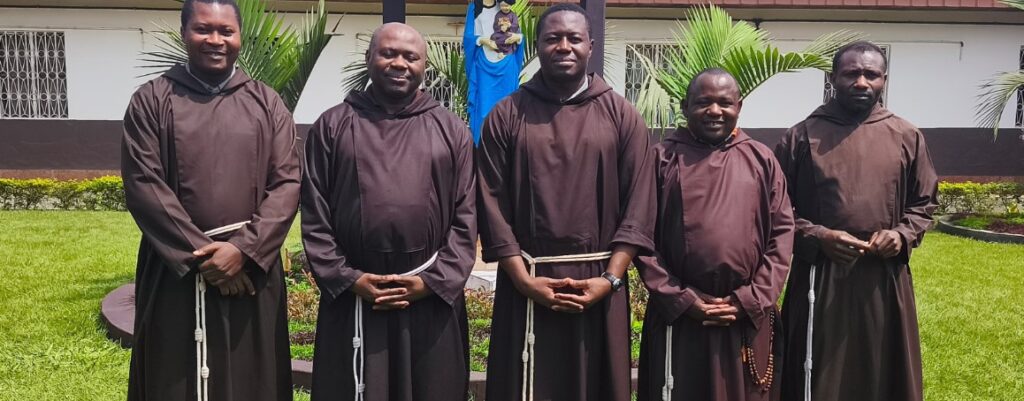
Considering this, let us examine what has been discussed regarding our African Capuchin Identity in the two PACCs. During the 4th PACC, Br. Vicente Kiaziku, who was then the general councilor for Africa and is now the bishop of the diocese of Mbanza Congo, addressed the topic of identity under the title “Capuchin consecrated life in Africa.” He covered numerous issues, including the increasing number of Catholics, the contributions of Capuchins and other religious to the impact, the challenges faced by the religious community, and his vision for action and opportunities for further development. In the third paragraph of the first part of his discourse, he highlighted the problem of Capuchin identity in general and specifically in Africa, offering two recommendations: the first being, “The more committed we are to missionary work, the more we need the support of a profound, solid spirituality based on the traditions of the Church and the heritage of our founders. This will assist us to acquire a deeper grasp of our identity as Capuchin missionary religious”.[1] The second recommendation is, “More and more, our African Capuchin scholars (if we have them), need to commit themselves to reflect on our Capuchin identity in Africa. They must commit themselves to think about and to propose actions that will assist our Capuchin friars in Africa and Madagascar in giving prophetic witness to the Gospel in our varied cultural, political and socio-economic situations. Such reflection will also promote the enculturation of Capuchin consecrated life in our continent.”[2]
Br. Vicente Kiaziku elaborated further by referencing Cardinal Malula, the Archbishop of Kinshasa, who stated: “Europeans brought Christianity to Africa; now it is up to the Africans to Africanise Christianity”. The he paraphrased this by saying: “Europeans, Indians or Americans brought Franciscanism to Africa. Now it is up to the Africans to Africanise Franciscanism. But all of this must necessarily first of all be based on a real knowledge and assimilation of Franciscan values, and a real knowledge of African culture. We will touch on this point indirectly when we deal with our identity.”[3] He then proposed that Africa is endowed with numerous values and religious symbols, rich wisdom, and spirituality. Regrettably, only a few of these divine gifts have been incorporated into our considerations of the consecrated life. We must draw upon our deep sense of hospitality and welcome, our spontaneity and warmth, our celebratory spirit and openness to others, our familial bonds, our respect for one another, and our connection to nature, including forests and rural areas, and integrate these values to support the flourishing of consecrated life on our continent.[4]
When we come to the 5th PACC, the topics have been addressed by General Minister Br. Mauro Jöhri and Br. William Ngowi under the theme: “Identity and Sense of Belonging in the African Context.” The General Minister’s presentation was founded on the content of his circular letter, which was previously written on 4 October 2014, with Prot. N. 00710/14. The matter of identity and belonging has been discussed in section 2.3, titled: signs of belonging. The General Minister approached this issue broadly, emphasizing certain signs of the challenges by stating that an individual who lacks a Franciscan Capuchin identity, characterized by radical poverty, simplicity, fraternity, and itinerancy, or a willingness to be sent to new locations, while showing an attachment to wealth and comfortable surroundings cannot truly possess a sense of belonging to the Order. He also pointed out the specific challenge of cultivating a dual identity and dual sense of belongingness.
Br. William Ngowi concentrated specifically on the unique circumstances of the Capuchins in Africa. He commenced his discourse by emphasizing the essence of Capuchin identities and proceeded to assert that a Capuchin brother is one who lives in accordance with those values and can identify himself as a Capuchin. He then elaborated on the concepts of identity and belonging. He stated that identity is intricately linked to the sense of belonging. This sense of belonging fundamentally relies on self-awareness and an understanding of the community, which involves recognizing, accepting, and internalizing the realities of one’s past or roots, the current situation, and one’s status, while striving for future goals to achieve personal aspirations. For him, belonging is distinct from ‘blending,’ which refers to the act of conforming to something that does not belong to oneself. In blending, an individual continues to perceive themselves as an outsider, an alien, or merely transitional. Such a person lacks knowledge of the community’s roots, present circumstances, and future prospects. An individual who merely blends into the fraternity feels that they possess different roots and values, thus cannot truly integrate into the community or fraternity in which they reside.[5]
After establishing the foundation for his analysis, he proceeded to investigate the extent to which the Capuchin African identity and sense of belonging are fostered. He referenced the experiences of members from one of the African circumscription, where they are informed or led to believe by the primary missionary that Africa has nothing to offer to consecrated life, and that all they possess is negative. Consequently, many of them fail to recognize their African values, which are fundamentally positive. He then detailed how they initiated the process of inculturation by encouraging the friars to delve into some of their African values that are inherently positive and can be integrated as African Capuchin values.
Conclusion
William’s presentation effectively demonstrated that Br. Vicente’s invitation for Africans to explore the depth of their cultures, after highlighting various values that can be incorporated into the consecrated life, has started to be addressed. However, this presentation is based solely on the experiences of one circumscription out of more than twenty-seven. We remain unaware of the circumstances in all other circumscriptions, apart from one. Therefore we can say that, this topic is raised repeatedly for several reasons: firstly, appropriate solutions are still being sought; secondly, even the proposed solutions are not fully adopted by all circumscriptions; and thirdly, the issue possesses a dynamic nature, necessitating ongoing research and proposals as time evolves.
3.2. Collaboration
The topic of collaboration addressed in the PACCes pertains to the interactions among the Capuchin circumscriptions in Africa, both internally and externally. During the 4th PACC, this was explored under the theme: Solidarity of personnel. The 5th PACC focused on the theme: The Need and Necessity of Collaboration among African Jurisdictions, while the upcoming 6th PACC will examine the theme: Mission as Collaboration in Human and Fraternal Relationships.
During the fourth PACC, Br. Jarek Konopko addressed the issue of the overall importance of personnel solidarity at a universal level, referencing PCO VII nos. 13, 14, and 15. He explored the true meaning of solidarity and clarified what it does not entail. Additionally, he discussed the foundation of solidarity, the developments that have occurred thus far, practical considerations, its challenges, and a grace.[6] In the fifth Pan-African PACC, Br. Wolfgang Pisa tackled the topic titled “Need and Necessity of Collaboration among the African Jurisdictions.” He commenced his address by recalling the PACC motto, “that we may be one,” which urges all Capuchins in Africa to unite, familiarize themselves with one another, and share experiences. He recounted the history of the Catholic Church in Africa, emphasizing the Capuchin life and mission, which frequently encounters challenges related to adequately prepared personnel in the formation sectors. To confront this challenge, he asserted that collaboration must be regarded as both a need and a necessity. He then identified the areas where collaboration is critically required, including personnel across all sectors, formation houses, and economic administration, as well as the importance of mutual economic assistance. Furthermore, he presented various models of collaboration both within Africa and beyond. In conclusion, he highlighted some barriers to collaboration and argued that it is essential not only to remedy existing deficiencies but also to embody our universal brotherhood. He noted that the existing conferences, namely EACC and CONCAO, present valuable opportunities to promote this collaboration.[7]
The two discourses were presented as complementary; Br. Jarek Konopko’s discourse emphasizes the general context, whereas Br. Wolfgang Pisa focused on the African context, underscoring specific instances where collaboration is essential. He further elaborated on the topic, detailing how and in which contexts it should be applied. I noted that this topic will also be addressed at the upcoming sixth Pan-African PACC, titled Mission as a Collaboration in Human and Fraternal Relationships, indicating that the issue of collaboration is examined within a specific context, namely mission. This illustrates the dynamism of the topic, transitioning from general to specific and then from specific to particular cases.
3.3. Economy
The issue of economy addressed in the 4th PACC, under the title ‘Poverty, economy and fraternal life’ by Br. Luis Eduardo Rubiano. On the fifth PACC it has been discussed under two titles ‘Financial Consequences of Changes in the Order’ dealt by br. Mark Schenk and ‘Economic Challenges towards Self-Reliance in Africa’ by Br. Mario Dias. In the upcoming 6th PACC it is going to be discussed under the tile fraternal economy in view of growth in human relationships.
Br. Luis Eduardo Rubiano began his discourse quoting PCO VI, which inphesises on the following priciples; Transparency, Participation, Equity, Subsidiarity, Solidarity, Austerity and Co-responsibility. Then he reminded what has been asked by the capitulars of the chapter to the general minster and his councilor that to ensure that all the brothers, beginning with initial formation, are familiar with the spirit and goals of the “fraternal economy” as proposed by PCO VI and VII and the recent documents of the Order. He stressed that this issue cannot be left to one time lesson, but instead it is a continues effort and askes in return that “What has the Province and the Conference done, or what is it doing, to implement this Chapter decision about formation for all the brothers in the fraternal economy and administration?” After asking the question, he explained what has been done so far by the general curia, which are The administration of the General Curia and the International Economic Solidarity in the Order. Finally he tried to evaluate the situation and forwarded his proposal. In his evaluation he underlined that The majority of provinces with economic means are declining numerically and no longer have the same level of resources to share, on the contrary Requests for help continue to rise. As a proposal he recommended that since the resource is getting lower and lower, to allocate properly the limited recourse the collaboration of the conference with the International Commission of the Order for Economic Solidarity to prioritize the requests.[8]
As I have mentioned, on the fifth Pan-African PACC the discourse was presented by two brothers, one focusing on the general situation, which is similar to what has presented in the previous PACC and the other focusing on the analysis of the favorable and challenging conditions for economic self – sufficiency for the Capuchins in Africa. Br. Mark Schenk stated that while the Order is growing in Africa and Asia (the regions that requests support), it is shrinking even more rapidly in America and Europe (the regions that provide support). Then he tried to forecast the long-term scenario of the solidarity and asked some questions: Contributions from the Order will slowly continue to decrease. Contributions from the Saint Francis of Assisi Fund may slowly increase, but it is very dependent on factors beyond our control. Funds from outside agencies may be available, but normally only for social projects. The questions and challenges he raised were:
- How can the Order confront the challenge of declining revenue?
- How can we make better use of our structures, such as the Guest House, the friary in Frascati, the International College, etc.?
- How can we help circumscriptions become less dependent on outside sources of income?[9]
Br. Mario Dias after mentioning the era of the European missionaries time in Africa, in which resourses were in aboundace, and the current era of the indigenous missionaries, in which resources are very scares, he made his evaluation using SWOT analysis and indicated the opportunities, and the challenges, the strength and the weaknesses.[10]
The three discourses presented in the two PACCes were more or less similar except the one presented by Br. Mario. It seems that the issue has been raised again and again because the problem is not solved. No only not to be solved, but it is increasing year after year. The presentations were focusing on the elaboration of the problems and left the floor for the participants and it seems that the output was not very strategic. Therefore, since the solution was not sought properly, then the problem continues to exist even in a more aggravated way.
3.4. Formation
The other topic that has been raised repeatedly was formation. In the 4th PACC it was discussed under the title Formation in the Capuchin Order Today, and in the 5th PACC it has been discussed under the title called Formation in Africa; while in the upcoming PACC it is going to be discussed under the title To form our young ones to grow both in human and Franciscan relationships.
Br. Carlos Novoa presented a discourse on the 4th PACC under the title called Formation in the Capuchin Order Today. His presentation focusses on the evaluation of the progress of the answer given to the appeal of the General Chapter of 2000, which was the establishment of formation for conducting the post-novitiate formation, the ongoing formation and the formation of formtors. Referring the impression of the capitulars of 2006, he mentioned that the effort was positive. However, later one he indicated that some jurisdictions demonstrated a backward step; there is a significant drop out of the finally professed brothers; challenges aced due to lack of maturity and problems of affectivity. Then as a way out he suggested the following element to be well noted:
- Attention to the clericalism “Capuchin Priests”, in which Capuchin is referred as an adjectival, qualifying the noun “priest”;
- Underling the inseparability of Identity and belonging, which are realized in a certain time and space;
- “Accompaniment” is not always properly appreciated;
- Collaboration has to be understood much more than a response to a particular need but as something very crucial for the Order;
- The importance of re-owning that sacred fire of the great Capuchin-Franciscan tradition.[11]
In the 5th PACC br. Charles Maloba presented a discourse on formation under the title reviewing formation system in Africa.[12] As he stated the main objective of his presentation was to explore the circumstances that impede the seamless transfer of values learned at family level to formation to the capuchin way of life. Then to suggest ways towards building a healthier and desirable fraternal life that enriches brothers’ evangelical witness. He started enumerated some of the African Values with the most important one, which is Omnipresent God or Sense of the Sacred; then, the dignity of life and the humanness of a person; relationships and Communality of life, the Sense of Welcome/Hospitality. After enumerating some of the values he reminded also the unfortunate realities in which due to the time in that consecrated life introduced in Africa, which is the colonial period, it is considered as something particular to the western and as alien to the Africans. To be a consecrated person means leaving behind African culture and values and embracing western culture. After the struggle of so many decades the perception is changed and today there are consecrated people all over Africa and consecrated life is no longer foreign. Yet, there are dilemmas that are still remain to some extent even today.
These dilemmas and challenges need to be worked one and solved adequately, if we need our formation bear proper fruits. He said that one of the challenges is the spirit of rebellion or different vision manifest in young people including the friars. This is common in the secular world in which everybody is looking to end the dominant Western status quo that does not take into consideration of local conditions and realities. Sometimes the secular views are literally reflected in the church as well. This needs a lot of attentions. The result of colonial subjugation and exploitation is the socio-economic and material inferiority which was internalised and became a psychological disease. A parallel white superiority complex was formed, namely socio-economic and material superiority which is internalised and becomes a complex of entitlement and belief in one’s superior worth. The traditional Africa family no longer exists. Its place has been taken by a modern urban, working and travelling family. If the family environment is no longer the school, which installs African Values and tradition in Children, it is bound to be chaotic, to be rough; it’s bound to impact on several spheres of life including initiation and training for consecrated life. Traditional family and lifestyle promoted altruism but with the advent of modernization of families egoistic tendency is the preferred behavior. The European orientation follows a protocol; it is scientific, procedural or formal (static), individualistic with rules, regulations and orderliness of life and activities while African orientation is informal, dynamic humanistic with little attention to rules and orderliness. The European culture prefers congruence and consistency to be able to know ahead of time and plan. The concept of “Truth” is involved here. When something stated differs from the actual ones, it becomes difficult to know what is ‘real’ or ‘true.’ Truth in the African setting may not seem to involve correspondence of the stated words to the actual situation. This will create difference and conflict between the European and the African in discussing matters.
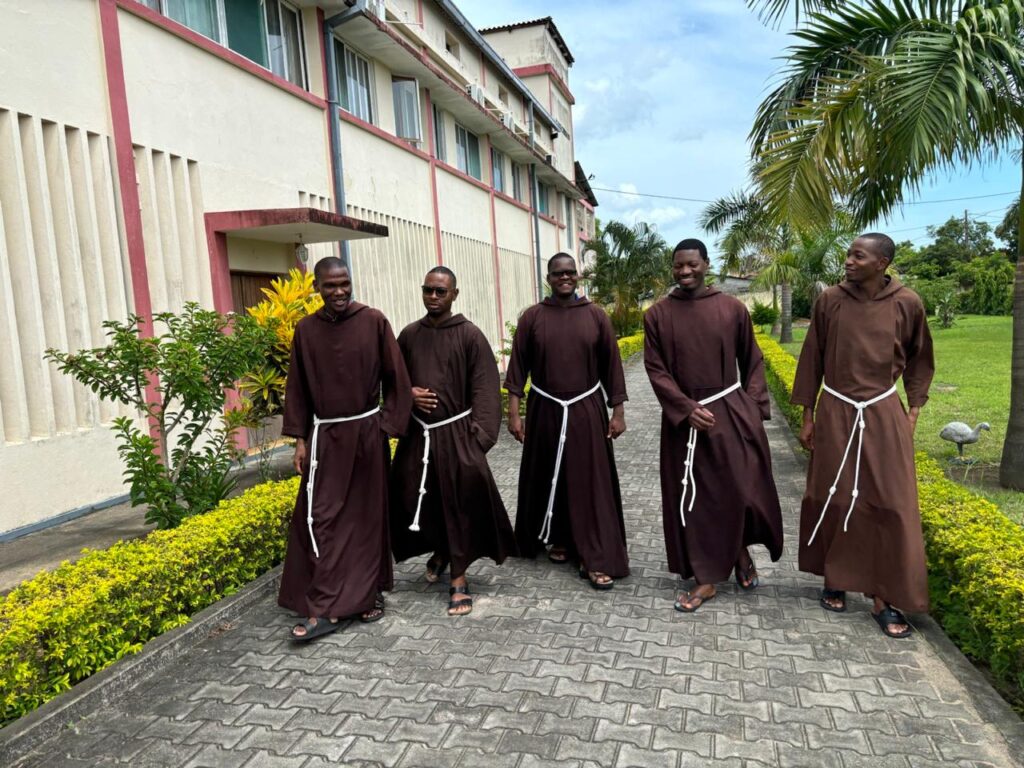

In many parts of Africa today, politics is now tied to ethnic persuasions other than ideological persuasions. This activates the political competition and attendant corruption in African countries. The church is not spared political influence neither is consecrated life. For instance, community used to be a place where joy is found or where tensions are released and are energized for our mission. But today community life itself has become a tension, a battleground. In religious communities, there is often only a business-oriented, I mean, merely functional, relationship. In connection to the evangelical values he posed the following challenges, by saying that the term ‘poverty’ does not sit well with Africa. It refers to the lack of basic human needs, the inability of individuals, households, families or entire communities to attain a minimum and socially accepted standard of living. It is deprivation and therefore has bad connotation. It stirs up idea of misery. The safe and appropriate word for Africans would be detachment. If detachment is used, it would mean the availability of things but limited use. Obedience is also takin as if it is a dutiful or submissive compliance to the commands of one in authority. God is in authority in Jesus his son who came to do his will. But in our formation obedience was introduced as a tool to silence dissent. The institutionalization of some behaviors in formation ends up being disciplinary formation other than human formation. You need to be a person before you are a capuchin. At priestly ordination, brothers are crowned elders by their ethnic communities. An older person has simply lived a longer life than most of people; an elder, on the other hand, is someone who is given the highest status in the community because he has lived a life of purpose, and there is nothing more respected than living a purposeful life. With elderly crowned is expected to demonstrate the fact that he has become an elder in the manner of conduct both in word and deed. Of course, there are many things expected from him, which clashes completely with the ideals of consecration, yet the difference shall be reconciled in a certain way, like building one’s own house with building a church; having children with spiritual fecundity and became the father of all the faithful and so on. Lastly, he mentioned the so called Sustainability panic: the financial insecurity, which is caused due to the reduction of subsides from Curia and Western provinces. He believes that these has created one problem, which is the mischievous ones have taken advantage to launch personal projects from which they may earn personal money to supplement to personal incomes. This has created an avenue for greed and egoism.
Finally, he concluded his presentation by forwarding the following recommendations. The spirit of sacrifice and self-denial for sustainability must be reclaimed. We need to continue working and walking with others as Christ meant us to be. In fact Africa understands and desires self-determination and the issue of self-sustainability remains top on the agenda of the Capuchins in Africa especially in the face of reduced income from traditional sources. As the Capuchins continue to grow so are the competing needs such as support for formation, ministry and not forgetting provision of brothers’ living stipend and healthcare. When a culture no longer meets the needs of a people or solve the problem confronting a people, that culture must transform; therefore De-Westernization of some aspects of formation that doesn’t help the contextualization of Capuchin Charism is needed. A Contextual (Customised) Formative Programme has to be developed. It is very important to underline on the importance of distinguishing conformity from genuine obedience. Finally, in all these process the importance of Filtration not to be forgotten, because everything present in the culture shall not be taken without filtration and adequate alignment.
The presentation of the two brothers is completely different, referring to different context. Br. Carlos Novoa addressed the general situation mentioning some of the challenges as global level; while Br. Charles Maloba addressed the particular situation of Africa. So, the two presentations are compliments each other perfectly. After saying that, I would like to add that the presentation of Br. Charles Maloba is amazing, informing us the depth and width of the richness of African culture with clear enumeration and recommendation of how to incorporate into the consecrate life. I think his work is one of the best elaborated one and if it is elevated to the level of scientific verifying the information with some sources it will be a monumental work.
4. THE STRATEGIC FRAMEWORK OF THE 6TH PACC
In the previous paragraph we have seen how the two previous PACCs dealt with those four topics repeatedly and understood that the repetition is needed partly because the topics are very important, partly the presentations were focusing to different context, partly appropriate solutions are still being sought; partly, even the proposed solutions are not fully adopted by all circumscriptions; and partly, the issue possesses a dynamic nature, necessitating ongoing research and proposals as time evolves. When the major superiors decided to have the sixth PACC, they have clear in their mind the following things: first, proposals and motions that come out of the congress shall be the output of not only the result of the major superiors, who attends the congress but the result of the entire brothers who are works in Africa. Therefore, making the 6th PACC participatory through the process is mandatory. Second, it is very important to make it strategic, so that the effectivity of the process is known clearly and whenever there is a certain setbacks proper interventions will be made. Thirdly, making the congress strategic, it helps not only to intervene when problems happen during the process, but also to make sure that the congress will be impactful.
The strategic framework of the 6th PACC has been structured around three main timelines: pre-celebration, celebration, and post-celebration.
- Pre-celebration: This timeline pertains to the period leading up to the 6th PACC celebration, focusing on setting the cornerstone. During this phase, two key activities are emphasized: identifying what we want to achieve or determining our desired outcomes, and interpreting the current context or assessing our present situation (reading the sign of the time), which is addressed through a baseline evaluation to know where we are.
- Celebration: This timeline encompasses the duration of the 6th PACC itself, scheduled for February 1-6, 2027, and is centered on mounting the pillars. The primary activities during this period include providing inputs and generating outputs. The inputs guide us in understanding how to achieve our desired outcomes, while the outputs inform our immediate actions and initiate our journey.
- Post-celebration: This timeline refers to the period following the 6th PACC celebration and focuses on furnishing the house. The main activities during this phase involve obtaining results and realizing strategic objectives. Achieving results ensures that we are progressing correctly and energizes us through the acknowledgment of small victories, while realizing strategic objectives insure the attainment of the major goals. For a more comprehensive understanding, please refer to the strategic framework chart in paragraph 4.1.
4.1. The chart of strategic framework
| Time line | Pre-celebration Setting the cornerstone | Celebration mounting the pillars | post-celebration furnishing the house | |||
| Descriptions | Preliminary work (Knowing what we want) Where we want to be? | Baseline assessment (reading the sign of the time) Where are we? | Input (Discovering the way out) How can we reach a place where we want to be? | Output (Starting the journey) What shall be our immediate actions | Result (celebrating small wins) Being on the right track | Strategic goals (exhibiting significant changes) Realizing one self |
| Selecting the themes;Setting objectives and determining the strategy;Deciding on the location and timing;Forming a committee;Identifying the necessary expertise;Allocating the budget. | The context of the OFM cap in every nation and the worldwide situationStrengths and weaknesses (at the level of each circumscription, conference, and assembly) related to each theme;Challenges and opportunities (at both country and continental levels) associated with each theme. | Valuable contributions are provided by the experts.Participants engage in discussions regarding the challenging issues and the potential solutions for each matter. | A shared understanding has been established among the participants regarding the themes.A mutual agreement has been reached concerning the problematic issues.Collective decisions have been made regarding the solutions, outlining a path forward. | The distribution of the intermediate results among all members of the circumscription is conducted.The development and execution of a concrete plan for each circumscription, aligned with the proposed direction, is undertaken.Initial impacts have begun to be observed.Experiences and feedback are being shared among the circumscription members. | Strategic goals are attained | |
| Indicator | Accomplishment of the tasks | Accomplishment of baseline analysis | Analysis of the problem and identification of systematic solutions | Shared comprehension, consensus, and resolutions | Impacts of the results | Components that facilitate the achievement of the objective |
| Measurements | The standard of quality for completed tasks | The extent of involvement of members from all circumscriptions and the procedure for the effective flow of quality information | The thoroughness of problem analysis and the logical soundness of the suggested solutions | Degree of comprehension and resoluteness regarding the decisions taken by the participants | Magnitude of impacts | The degree to which the elements manifest that facilitates the achievement of the objective |
| Assumption | There may be a time constraint | There may be an issue with communication and a lack of interest in involvement. | There may be a deficiency of information regarding each and every circumscription. | There may be constraints related to time and budget. | There may be a reduced focus from the relevant authorities, as they could be preoccupied with their daily responsibilities. | There may be reduced concern regarding the achievement of the objectives among certain jurisdictions. |
4.2. Progress in line with the strategic framework
4.2.1. The Purpose
To realize our Capuchin identity by fosteringhuman and fraternal relationships, which guide our life, formation, mission, communication, economic stewardship, and collaborative witness alongside the local Churches and the wider world.
4.2.2. Issues, goals, Strategic goals and baseline assessment
- The importance of human relationship in Africa and the Capuchin identity: the main goal that is intended to be achieved under this issue is the fostering of human relationships and the Capuchin identity. The strategic goals that guide us toward the attainment of this main objective include the fraternal sharing and utilization of resources; the reconciliation of the challenge posed by the Capuchin order’s charism, which developed in Europe, with African family values; and the clarification of the dilemma between convent tradition and the practice of fraternity. The baseline assessment in relation to these strategic goals involves identifying how financial resources are managed, particularly those acquired through individual labor. How are projects administered? Are there any issues related to the misallocation of funds and other resources? What are the similarities and differences between African family values and the Capuchin charism of community life as developed in the West? How are the traditions of the convent and the practice of fraternity maintained in Africa?
- Fraternal economy in view of growth in human relationships: the main goal that is intended to be accomplished through this issue is the establishment of a fraternal economy that fosters the development of human relationships. The strategic objectives that guide us towards achieving this main goal include convincing the African Capuchins of the necessity of a fraternal economy and establishing timelines for self-sustainability; reconciling institutional charism with investment areas; and ensuring that African circumscriptions attain self-sufficiency. The baseline assessment in relation to these strategic objectives involves identifying how the limited funds at our disposal are managed. How do the brothers comprehend the principle of subsidiarity? What is the level of motivation among the brothers regarding self-sustainability? Which investment areas align with our charism? What challenges and opportunities exist in your country for investment as a Capuchin Order? Is there a possibility for one circumscription to invest in another country under a different circumscription?
- To form our young ones to grow both in human and Franciscan relationships: the main goal that is intended to be achieved through this issue is the establishment of the formation of youth in both human and Franciscan relationships. The strategic objectives that guide us towards the attainment of this primary goal include ensuring that a reasonable amount of necessary funding is available in accordance with the number of vocations; organizing the formation program in a strategic manner; adequately preparing formation resources and formatters; ensuring that infrastructures are well organized and effectively utilized; placing emphasis on the formation of lay brothers; and fostering a deep understanding of Capuchin Charism and Franciscan attitudes. The baseline assessment for these strategic objectives involves determining the financial status of the formation houses. Where does the funding originate? Are all candidates who meet the requirements able to be admitted? Is the Racio Formationis prepared at the circumscription level? Are there comprehensive and documented guidelines for each step of the formation process? Are there well-prepared books and manuals on each topic? Are there qualified and willing formatters available for each stage? Are there appropriate houses designated for each stage of the formation program? Are there formation houses that are not being utilized effectively, and if so, why? How is the formation of the lay brothers conducted? What is their response to it? How is the ongoing formation of the brothers progressing? What methodologies are employed to help the brothers deeply understand Capuchin values and develop resilience against various vices such as individualism, alcoholism, tribalism, etc.?
- Mission as collaboration in human and fraternal relationships: the main goal that is intended to be accomplished through this issue is to reflect our human collaboration and fraternal relationships within our mission. The strategic objectives that guide us towards achieving this main goal include clarifying the dilemma between ‘collaboration’ and ‘mission’; fostering a positive perception of the mission among the African Capuchins; addressing the financial challenges associated with missionary activities; and ensuring that missionary efforts incorporate ‘plantacio ordinis’ and economic sustainability from the outset. The baseline assessment for achieving these strategic objectives involves identifying how the terms ‘mission’ and ‘collaborator’ are understood by the brothers. What sentiments do the brothers experience? How do they perceive the mission? Are they prepared to engage in missionary work in one of the African countries? Are there any initiatives in place to tackle the economic challenges of missionary activities? What circumstances have been left by the missionaries in your country concerning Capuchin charism and financial resources?
- Capuchin brothers’ relationship with the local Ordinaries: the main goal that is intended to be accomplished under this issue is the establishment of a fraternal relationship between the Capuchin brothers and the local Ordinaries. The strategic objectives that guide us towards achieving this main goal include ensuring that the convention established by the Order is comprehensively understood by all parties involved; facilitating appropriate pastoral agreements between the brothers and the local ordinaries; and assigning places, responsibilities, and other pastoral duties to the brothers in accordance with pastoral charity. The baseline assessment concerning the strategic objectives involves determining whether the brothers are aware of the convention articulated by the General Minister. What is the nature of the brothers’ pastoral activities in relation to the convention? How is the relationship between the Capuchin brothers and the local ordinaries, as well as the local priests? Is there a formal pastoral agreement in place between the brothers and the local ordinaries? If such an agreement exists, would it be possible to share its format? If not, how is communication managed? How do the local ordinaries assign various responsibilities to the brothers? What is the overall evaluation of the brothers’ pastoral service by the local ordinaries?
- Justice Peace and Integration of Creation in Africa: the main goal that is intended to be accomplished under this issue is the advancement of JPIC in all locations where the Capuchins operate, in accordance with the Franciscan charism. The strategic objectives that guide us towards the realization of this main goal include ensuring that all brothers comprehend JPIC in alignment with the Capuchin Charism; that JPIC is effectively integrated into all activities undertaken by the brothers; and that all socio-pastoral initiatives conducted by the brothers are aligned with the principles of JPIC. The baseline assessment concerning the strategic objectives involves determining whether there exists an office or desk responsible for coordinating JPIC activities, whether all brothers have a comprehensive understanding of JPIC, whether there are any activities related to JPIC, and whether there is a strategic plan pertaining to JPIC.
CONCLUSION
The Pan-African Capuchin initiative rightfully earns the designation of a congress, as it has been referred to as such in an institutional document. Furthermore, it serves as a formal, periodic gathering of representatives from all Capuchins in Africa, aimed at discussing and making decisions on various matters. The objective is to strengthen the Capuchin identity by fostering human and fraternal relationships that underpin their life, formation, mission, economic stewardship, and collaborative witness alongside local Churches and the wider world. To date, the PACC has convened five times, with the sixth meeting planned to take place at St. Francis friary in Addis Ababa, Ethiopia, from February 1 to 6, 2027. During the congress, numerous decisions have been reached; however, the resolutions made during the 2nd and 5th PACC stand out as the most significant. The 2nd PACC resulted in the establishment of two conferences, EACC and CONCAO, while the 5th PACC led to the formation of the Capuchin Assembly of Major Superiors of Africa (CAMSA).
Besides the establishment of the conferences and the assembly various topics have been discussed among which Identity, collaboration, economy, and formation appeared recurrently. The reason of repetition were: first, because the topics are very important, second, in each time the presentations were focusing to different context, third, appropriate solutions are still being sought; partly, even the proposed solutions are not fully adopted by all circumscriptions; and partly, the issue possesses a dynamic nature, necessitating ongoing research and proposals as time evolves.
In addition to the establishment of the conferences and the assembly, a variety of topics have been discussed, among which Identity, collaboration, economy, and formation have emerged recurrently. The reasons for this repetition are as follows: first, these topics hold significant importance; second, each presentation has focused on different contexts; third, suitable solutions are still being pursued: partially, even the suggested solutions have not been fully embraced by all jurisdictions; and partially, the issue has a dynamic nature, requiring continuous research and proposals as time progresses.
In the course of preparing for the 6th PACC, the major superiors took the third reason very seriously and resolved that the sixth PACC would be conducted differently. They established the following directives:
- Firstly, the proposals and motions arising from the congress must reflect not only the views of the major superiors attending the congress but also the perspectives of all the brothers working in Africa. Thus, ensuring that the 6th PACC is participatory throughout the process is essential.
- Secondly, it is crucial to adopt a strategic approach, so that the effectiveness of the process is clearly understood, and appropriate interventions can be made in the event of any setbacks.
- Thirdly, adopting a strategic framework for the congress not only facilitates timely interventions when issues arise during the process but also ensures that the congress has a significant impact. The implementation of all decisions is imperative, and the strategy aids in monitoring the process until the next congress celebration. Consequently, the congress is structured around three timelines: the pre-celebration timeline, the celebration timeline, and the post-celebration timeline.
[1] Br. Vicente Kiaziku, Capuchin consecrated life in Africa, A paper presented on the 4th PACC, 2008, Part I, paragraph 3.
[2] Cfr., Br. Vicente Kiaziku, Capuchin consecrated life in Africa, 2008.
[3] Cfr., Br. Vicente Kiaziku, Capuchin consecrated life in Africa, 2008.
[4] Cfr., Br. Vicente Kiaziku, Capuchin consecrated life in Africa, 2008.
[5] Cfr., Br. William Ngowi, Identity and Sense of Belonging in African context, A paper presented on the 5th PACC, 2016.
[6] Cfr., Br. Jarek Konopko, Solidarity of personnel, A paper presented on the 4th PACC, 2008.
[7] Cfr., Br. Wolfgang Pisa, The Need and Necessity of Collaboration among African Jurisdictions, A paper presented on the 5th PACC, 2016.
[8] Cfr., Br. Luis Eduardo Rubiano. Poverty, economy and fraternal life, A paper presented on the 4th PACC, 2008.
[9] Cfr., Br. Mark Schenk, ‘Financial Consequences of Changes in the Order’ A paper presented on the 5th PACC, 2016.
[10] Cfr., Br. Mario Dias. ‘Economic Challenges towards Self-Reliance in Africa’ A paper presented on the 5th PACC, 2016.
[11] Cfr., Br. Carlos Novoa, Formation in the Capuchin Order Today, A paper presented on the 4th PACC, 2008.
[12] Cfr., Charles Maloba , reviewing formation system in Africa, A paper presented on the 5th PACC, 2016.