News

Tanzania: The 2025 Ordinary Meeting of EACC

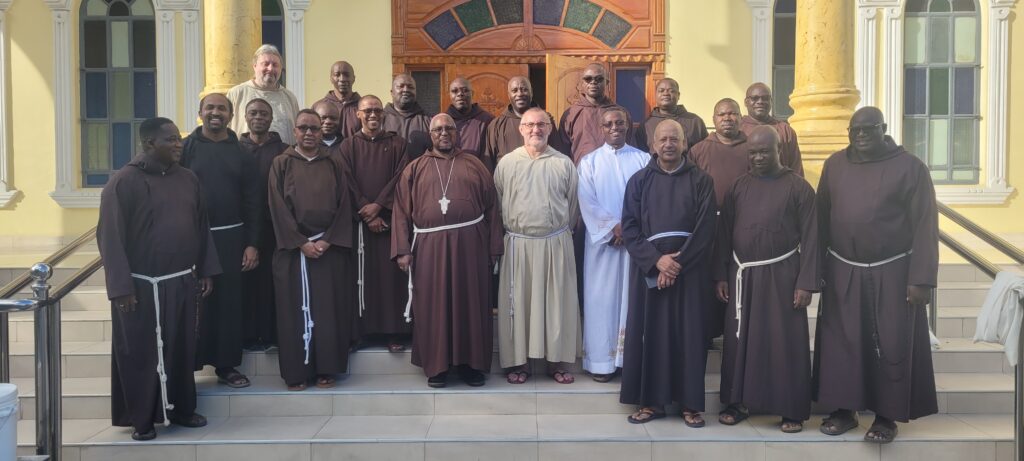
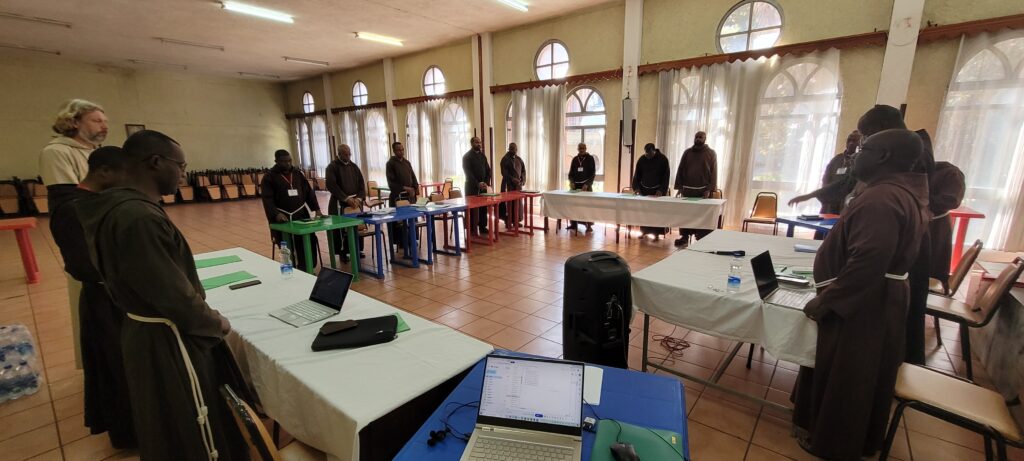
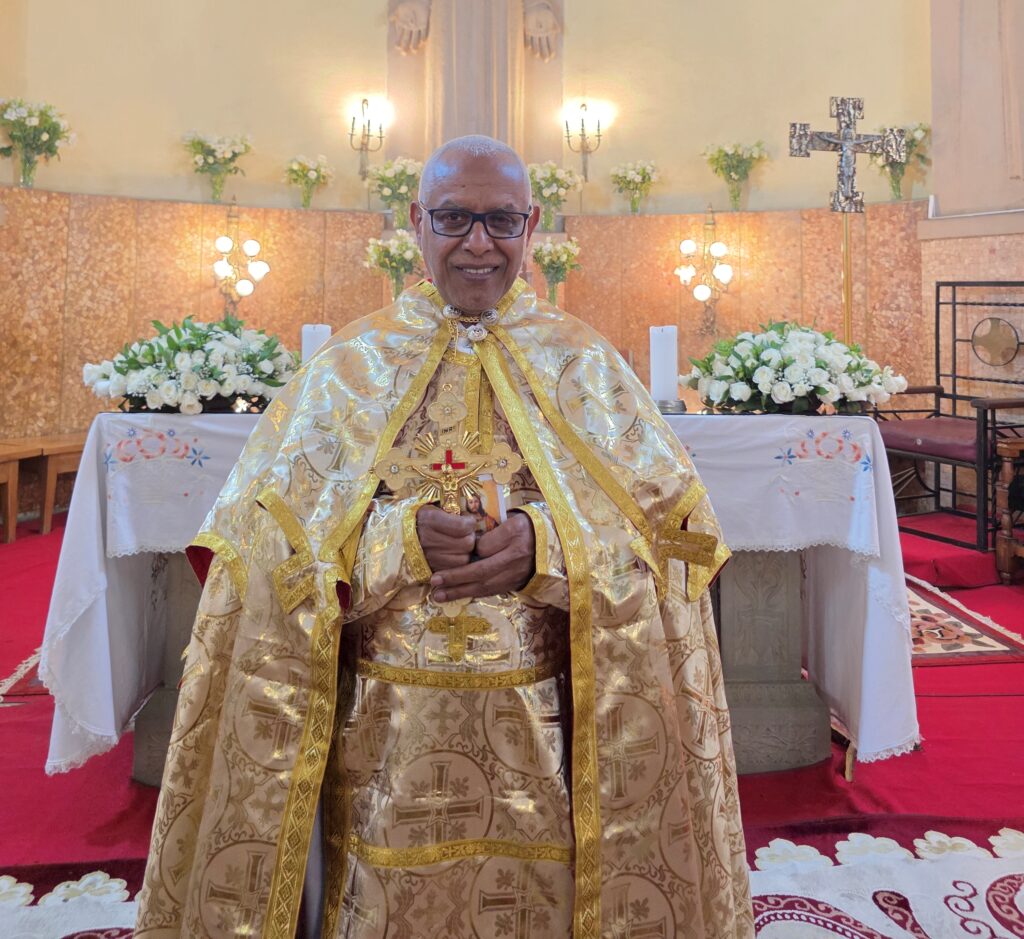
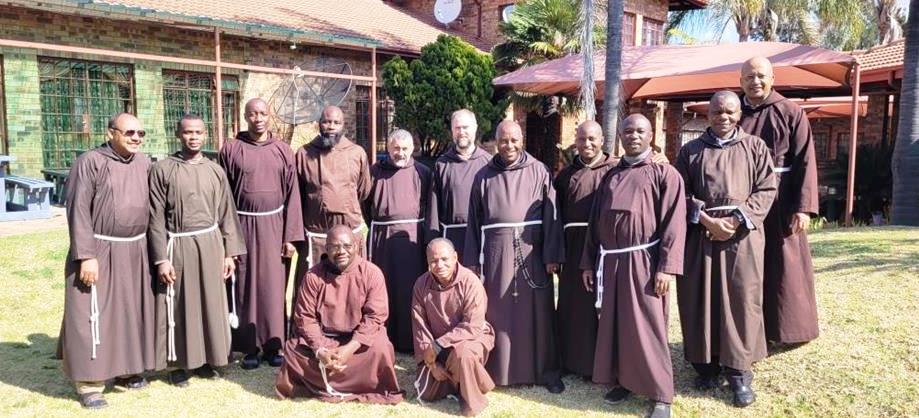
The 2025 ordinary meeting of EACC was held in Dar Es Salaam, Tanzania, on November 18, 2025, at St. Padre Pio Pastoral Center. The total membership consists of fifteen individuals, with five absent and ten present. The meeting was officially commenced with the celebration of the Holy Eucharist at 6:30, presided over by His Excellency Archbishop Tadewos Ruwaichi. The agendas discussed by the members included: The meeting began with the reading, correction, and approval of the minutes from the extraordinary meeting held in Addis Ababa on February 19, 2025. Subsequently, the members engaged in discussions on each agenda item. The outcomes of the meeting were as follows: The meeting is adjourned on November 18, 2025 at 18:30

Tanzania: The 2025 Ordinary Meeting of EACC Read More »

The 2025 ordinary meeting of CAMSA

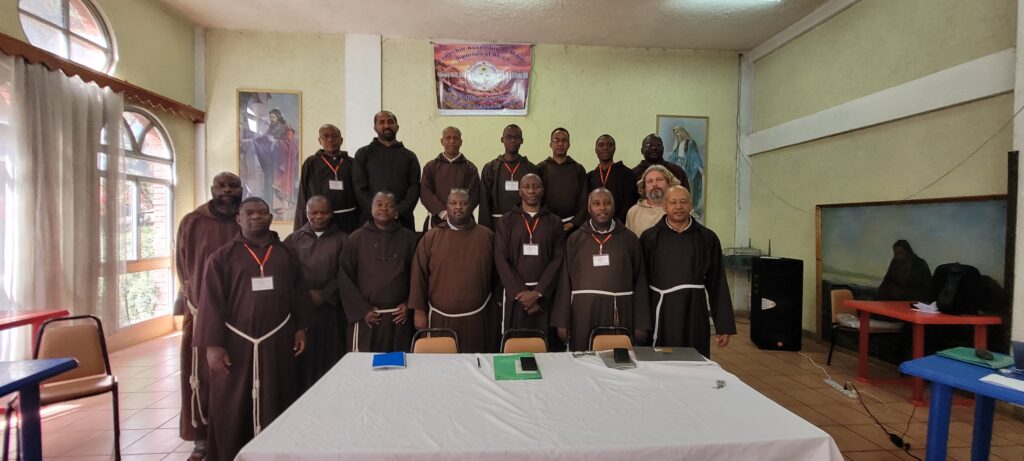
The Ordinary meeting of CAMSA for the year 2025 took place at the St. Pio Pastoral Center in Dar Es Salaam, Tanzania, on November 20-21, 2025. The Assembly comprises a total of twenty-seven members, of which ten were absent and seventeen were present. The topics discussed during the meeting included: Each day, the meeting commenced at 6:30 with the Morning Prayer and the celebration of Holy Mass, concluding at 18:45 with Vespers. The meeting was officially opened by the Holy Mass officiated by His Grace Archbishop Tadewos Ruwichi. The assembly began its proceedings by reading, correcting, and approving the minutes from the extraordinary meeting held in Addis Ababa on February 20-21, 2025. Subsequently, it moved on to discuss the agendas one by one. In conclusion, they wrapped up their meeting with the following outcomes: The meeting is adjourned November 20, 2027 at 18:30

The 2025 ordinary meeting of CAMSA Read More »

THE 2025 EXTRA ORDINARY MEETING OF EACC

The 2025 extraordinary meeting of EACC took place in Addis Ababa on February 19, 2025. Each day commenced at 6:30 with Lauds, followed by Holy Mass, and concluded at 18:45 with the prayer of Vespers. The agenda for the meeting included: The meeting was officially commenced by Br. Patrice, who welcomed the attendees and explained his role, which began a few months ago at Curia, aimed at nurturing the life of the brothers to ensure it thrives across the continent. He then urged the conference to place significant emphasis on the preparation for PANAF, which is scheduled to take place in February 2027. The outcomes of the meeting were as follows: The meeting is scheduled to adjourn on February 19, 2025, at 6:00 PM.

THE 2025 EXTRA ORDINARY MEETING OF EACC Read More »

The 2025 Extra Ordinary Meeting of CAMSA

The 2025 extraordinary meeting of CAMSA took place in Addis Ababa from February 20 to February 21, 2025. Each day commenced at 6:30 with Lauds, followed by Holy Mass, and concluded at 18:45 with the prayer of Vespers. The agenda for the meeting included: The meeting was officially opened by Br. Gebrewold Gebretsadik, the general councilor for Africa, who started by highlighting the necessity of convening this extraordinary meeting of CAMSA. He explained that the meeting was essential due to the urgent preparations required for the 2027 PANAF. Consequently, he urged the members of the assembly to focus their attention on the preparation of PANAF 2027, which must have a significant impact on the Capuchin life in Africa by identifying our challenges and proposing solutions for the future. The outcomes of the meeting were as follows: The meeting will be adjourned on February 21, 2025, at 10:00 AM.

The 2025 Extra Ordinary Meeting of CAMSA Read More »

A JOURNEY THAT YIELDED FRUITS IN ABUNDANCE: The Celebration of the 50th Anniversary of Priestly Ordination of Br. Berhe Tsegeyohannes

The date of June 21, 2025, marked the 50th anniversary of Br. Berhe Tsegeyohannes’s priestly ordination, a day of great significance not only for him but also for all members of the Capuchin Province of Ethiopia. Br. Berhe, a Capuchin brother from St. Francis Province of Eritrea, has been serving in Ethiopia since his ordination. When the St. Francis Formation House in Addis Ababa was established in 1970, he was among the first students to relocate from Dekemehare, Eritrea, to Addis Ababa, Ethiopia, to pursue his studies in philosophy. After completing his philosophy education, he returned to Asmara to further his theological studies. However, his superior decided that he should attend his theology classes in Dublin rather than Asmara. As a result, he traveled to Ireland and studied theology in Dublin. On June 15, 1975, he was ordained as a priest in Dublin, Ireland, after finishing his theology courses. He then enrolled at University College Cork, where he earned an MS in philosophy before returning to his homeland. Since then, he has dedicated the past fifty years to serving the Order, primarily at the provincial office and in formation houses. His initial assignment was as the guardian of St. Francis Friary in Addis Ababa, Ethiopia, which serves as a formation house for students of Philosophy and Theology; he was subsequently transferred to Adama/Nazareth to serve as the guardian of the fraternity, another formation house for postulants. Following his time in Adama/Nazareth, he moved to the Megenasie novitiate house, where he took on the roles of guardian and novice master. After completing his service as novice master, he returned to St. Francis Friary in Addis Ababa as the guardian of the fraternity, the very place where he commenced his first ministry. Additionally, he has held various positions including guardian of the Holy Savior fraternity, director of postulants, director of theology students, chaplain of the international community, provincial secretary, and treasurer, among others.  As noted by Br. Hailegabriel Meleku, a distinguished member of the province, Br. Berhe was deeply committed to the poorest of the poor and devoted to the formation of young candidates for our Order. He never hesitated to provide food for impoverished families at any cost. His unwavering dedication to serving street children resulted in the education of hundreds of them. In addition to Br. Hailegabriel, numerous brothers, including those who have departed from the Order, have shared their testimonies, highlighting his exceptional formation methods and his commitment to guiding the youth on their vocational journeys. One of his notable sayings was, “one of the signs of the presence of God’s blessing upon our Order is the multiplication of vocations; and vocation to our Order is possible only when our parishes are a welcoming place for the young.” Regrettably, he did not have the opportunity to lead large parish churches, yet he exemplified kindness, fraternal care, and a welcoming spirit towards all those under his guidance. Several brothers who were part of his formation have expressed their views, stating that his contributions continue to shine in the lives of many young and middle-aged members of the Order, as well as those who have left the Order but continue to lead noble Christian lives. They remarked that his influence remains significant. One of the brothers recounted how he addressed a question posed by the students of philosophy and theology during his tenure as the guardian of the St. Francis formation house in Addis Ababa. They inquired, “Why do some brothers act unkindly and treat us poorly?” His response was straightforward yet profound. He replied, “When you find yourselves in a similar position, refrain from making the same error.” All members of the Capuchin Province of Ethiopia extend their best wishes to him on his anniversary, hoping for a joyful ministry filled with continued success in his life. August 13, 2025 By Br. Worku Demeke

A JOURNEY THAT YIELDED FRUITS IN ABUNDANCE: The Celebration of the 50th Anniversary of Priestly Ordination of Br. Berhe Tsegeyohannes Read More »

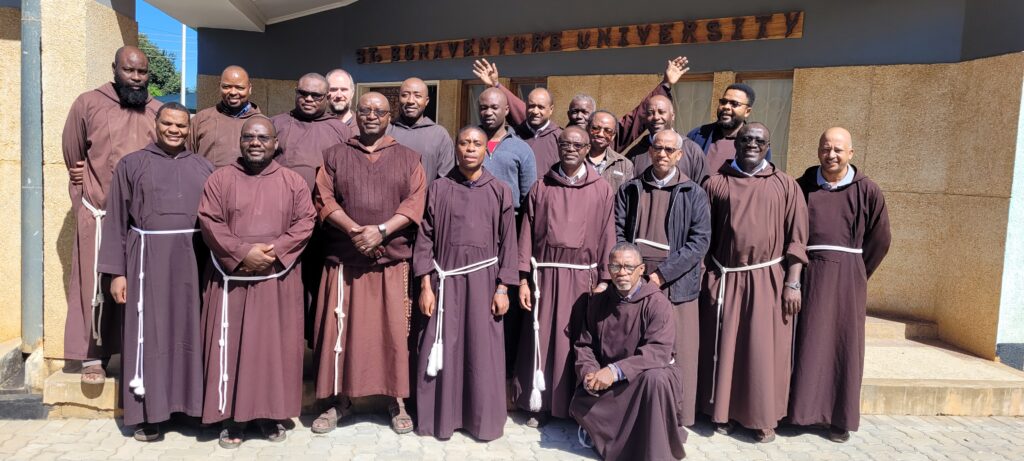
ST. BONAVENTURE UNIVERSITY COLLEGE OF LUSAKA: A Collaborative Venture Between the Three 1st Order Franciscan Families

1. Beginnings St. Bonaventure University traces its roots to an earlier collaborative venture between the three families of the Order of Friars Minor in the historic town of Livingstone in Zambia, just a short distance from the world-famous Victoria Falls, or to give the Falls their local name, Mosi O Tunya. It was in 1978 that the Zambian Capuchin Chapter discussed the possibility of co-operation with other religious institutes in Zambia to establish joint facilities for post- noviciate formation. Nothing came of this immediately, but in 1981 the then South-East African Capuchin Association (SEACA) explored the idea of establishing a house for philosophical studies in Zambia, with English as a common Language. This idea was adopted by the SEACA the following year. In the same year, 1982, the two Conventual Custodies in Zambia expressed an interest in participating in this venture. Further meetings in 1983 resulted in a substantial degree of agreement concerning the aims and programmes of such a venture. In 1986 the Friars Minor in Zimbabwe and of the then Vicariate of St. Francis in Africa inquired about their possible participation, and all welcomed this. It is out of such meetings that the Franciscan House of Studies opened in Livingstone Zambia in May 1984 with five students. It is, therefore, from this small beginning that the present St. Bonaventure College-Franciscan Formation Centre takes its origin. 2. The College As the number of staff had continued to grow it soon became apparent that the premises in Livingstone would need to be expanded or a new Institute founded. After a series of meetings between the representatives of the three families of Friars Minor with the consent of the Zambia Episcopal Conference St. Bonaventure College – Franciscan Formation Centre was founded in Lusaka. On 20th January 1988 the Ministers of the three Franciscan families in Southern Africa signed a formal agreement to found St. Bonaventure College. Construction began in November 1988 and the cornerstone of the College was blessed by H.E. Josef Cardinal Tomko, Prefect of the Congregation for the Evangelization of the Peoples, on 5th May 1990, in the presence of all the bishops of the Zambia Episcopal Conference, numerous friars and local people. The first students moved from Livingstone to Lusaka in July 1991 and classes commenced in November the same year. Thus, SBC came to life. On the 27th June 1992 the three Ministers General of the Order of Friars Minor officially blessed the College. Then, from 9th June 1994 St. Bonaventure College was registered as a Private School by the Ministry of Education of the Zambian government, and renewed every year. Over the years, up to twenty jurisdictions of Friars Minor in English and Portuguese speaking Africa have involved themselves in this project. It is worthwhile to mention here that other Religious Congregations have shown an interest of joining the College. The major Superiors, in different annual meetings of the Board of Governors unanimously decided to open its doors to non-Franciscan Religious Institutes. A good number of students from Mariannhill Missionaries (CMM), Divine Word Missionaries (SDV), Oblates of Mary Immaculate (OMI), Passionist Fathers (CP), Salesians of Don Bosco (SDB) and others study at the University. 3. The Library It cannot be denied that a library is a corner stone of every institution. Its main purpose is to help its users to have access to the relevant information for learning, teaching and research purposes. Against this backdrop, SBU Library, also known as John Hardings Library, exists to provide quality materials and services which fulfil educational and informational needs of the entire community in a conducive environment. In order to achieve all these goals, the Library Department has continued to improve the environment and its collection to meet all the users’ needs. Currently, the library has more than 30000 information sources that include books and journals. All these are automated and fully secured. Further, the library has a reliable internet facility. In addition, John Harding’s Library is now a fully member of the Zambia Library Consortium. Through the Consortium, the library has now subscribed to various Databases for E-Journals that our users are accessing remotely. Our next plan which is in the pipeline is to subscribe to E-Library. 4. Affiliation to the Pontifical University Antonianum Officially St. Bonaventure College was affiliated to the Pontifical University Antonianum (PUA), Rome in 2000 when the affiliation was granted ad experimentum for five years (2000-2005). By December 2005 we applied for its renewal and it was granted ad biennium. On 10th April 2008 the Congregation of Catholic Institutes confirmed the affiliation to PUA donec aliter provideatur. 5. St. Bonaventure University Officially St. Bonaventure College was raised to the status of University on 13th September 2018 by the Zambian Ministry of Education (MOE). It was also required to register all its programmes for accreditation with the Higher Education Authority (HEA). St. Bonaventure University has met all the required standards for a higher learning institution and the philosophy programme is already registered with HEA. 6. Current Programmes Currently St. Bonaventure University has four programmes that are running. These are: 7. Prospective Programmes The following programmes will soon commence at St. Bonaventure University. April 9, 2025 By Br. Owen Mwene

ST. BONAVENTURE UNIVERSITY COLLEGE OF LUSAKA: A Collaborative Venture Between the Three 1st Order Franciscan Families Read More »

A SYMBOL OF HEALTHY COLLABORATION FOR THE SUCCESS OF A MISSION: Capuchin Custody of South Africa

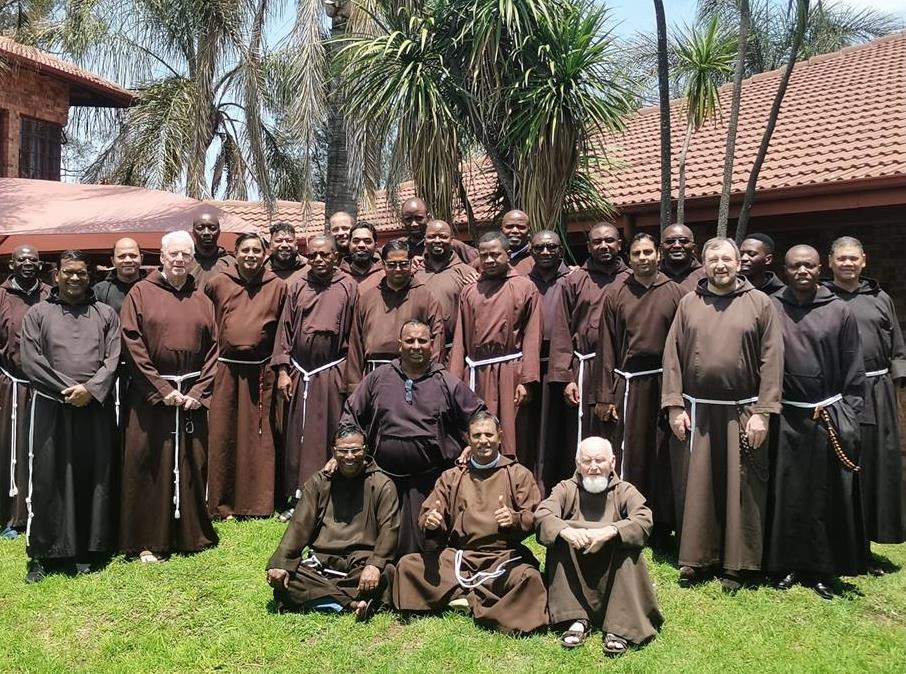
The following report highlights the happenings in the life of the Capuchin Custody of South Africa over the last three years. The main agenda from the time of our 12th Ordinary Chapter in 2021 included: Prioritising fraternity; developing our Formation Programme; the way of development for our Formation House; the Promotion of Vocations, and sustaining of Fraternal Economy.These issues presented to the platform for our more recent Chapter in 2024, at which occasion the following brothers were elected: (see below, left to right) Br Albert Gonsalves (Custos), Br Ewald Nangay (1st Councillor), Br Anstey Kay (2nd Councillor), Br Vicent Kinabo (3rd Councillor), Br Nilesh Vaz (4th Councillor).  We are proud to share about our Custody’s small but steady progress, in living out our distinctive Capuchin charism in this very special part of Africa. At present, we are 20 perpetually professed brothers (19 priests), serving variedly in three different dioceses in the country. We have 3 temporary professed brothers along with 3 other temporary professed brothers from the Capuchin Province of Madagascar. All are studying at St Joseph’s Theological Institute, Pietermaritzburg. We are also happy to have received at least 2 men into the postulancy programme at the beginning of this year; they reside at our founding parish/friary of St Mary of the Angels, Athlone (built in 1933). (See below Rite of Reception for Postulants Feb. 2025). THE RECENTLY DEPARTED It was with unexpected sadness that we experienced the death of two of our most beloved brothers over the last three years. On 30 April 2023, the then guardian of St Padre Pio Centre, Br Andrew Kiyanga, died in a Pretoria hospital. His body was repatriated to the country of his birth, Tanzania soon after. Then on 15 September 2024, Br Seán Cahill, a missionary from Ireland, who served in South Africa for 51 years, passed away after concelebrating the 10am Mass at Immaculate Conception Church in Parow, Cape Town. Both friars are still sorely missed and we give thanks to God for their lives, and to their Capuchin home provinces of Tanzania and Ireland, for bringing them into the life of our Custody in South Africa.  NEW ARRIVALS Our Custody is still privileged to be part of a healthy collaboration with several other circumscriptions. Notably in the last few years, we were happy to welcome Br. Erasmus Veneti, who arrived in South Africa on 10th May, is from the Capuchin Province of Tanzania. We also welcomed Br Rolan Koli on 18 October 2024, from the St Bonaventure Capuchin Province in Maharashtra, India. CELEBRATIONS In November 2022 we completed an uplifting Custody Retreat with Archbishop emeritus William Slattery OFM. This was the first occasion since the start of the Covid-19 pandemic restrictions that all the friars could meet once more for retreat as a Custody. In early July 2023, South Africa celebrated the news that the Archbishop of Cape Town, Stephen Brislin, had been elevated to the rank of Cardinal. The archbishop received the red hat at the Consistory in Rome on 30 September 2023. 2024 began confidently, after our Custody’s fraternal gathering at the end of 2023 (19-24 November), the gathering incorporated the theme of the Franciscan Centenary celebrations (marking the 800th anniversary of the Rule of 1223). Many Capuchin parish communities, together with the OFS, took up the initiative of beginning the Centenary celebration by promoting the special Plenary Indulgence on the Occasion of the Eighth Centenary of Christmas at Greccio. On 19 January 2024, the Fraternity of St Lawrence of Brindisi Formation House, Howick officially welcomed the safe arrival of three Capuchin Students from Madagascar: Br Wanald Reginaldhino Tombozafy, Br Heriniaina Eugene Andrianarintsoa and Br Bemaharavo Daniel. A month later the community at Howick happily also received a new 9-seater vehicle to accommodate the transport needs of the friars there. The 28th of January 2024 marked the 90th birthday of our most senior friar, Br Rufino Ferris (who is still in good health and active in the ministry of deliverance and healing). General government elections were held in South Africa on 29 May 2024 to elect a new National Assembly as well as the provincial legislature in each of our nine provinces. This was the 7th general election, held after the end of the apartheid era, celebrating 30 years of democracy! The election resulted in the formulation of a Government of National Unity (whereby the ANC party lost its longstanding majority vote). On 22 November 2024, we officially concluded our 13th Ordinary Chapter of the Custody, presided over by Br Adrian Curran (rep. of Irish Provincial), at St Padre Pio Centre, Pretoria. (See group photograph at Custody Chapter 2024). ONGOING FORMATION Our Lady, Mother of Africa, pray for us! 20 July 2025 By Br Anstey Kay Custody Secretary, South Africa

A SYMBOL OF HEALTHY COLLABORATION FOR THE SUCCESS OF A MISSION: Capuchin Custody of South Africa Read More »

A CHURCH WHERE THE CELEBRATION OF HOLY MASSES LASTS FOR SEVEN HOURS: Glimpse of Pastoral Service in the Capuchin Province of Ethiopia

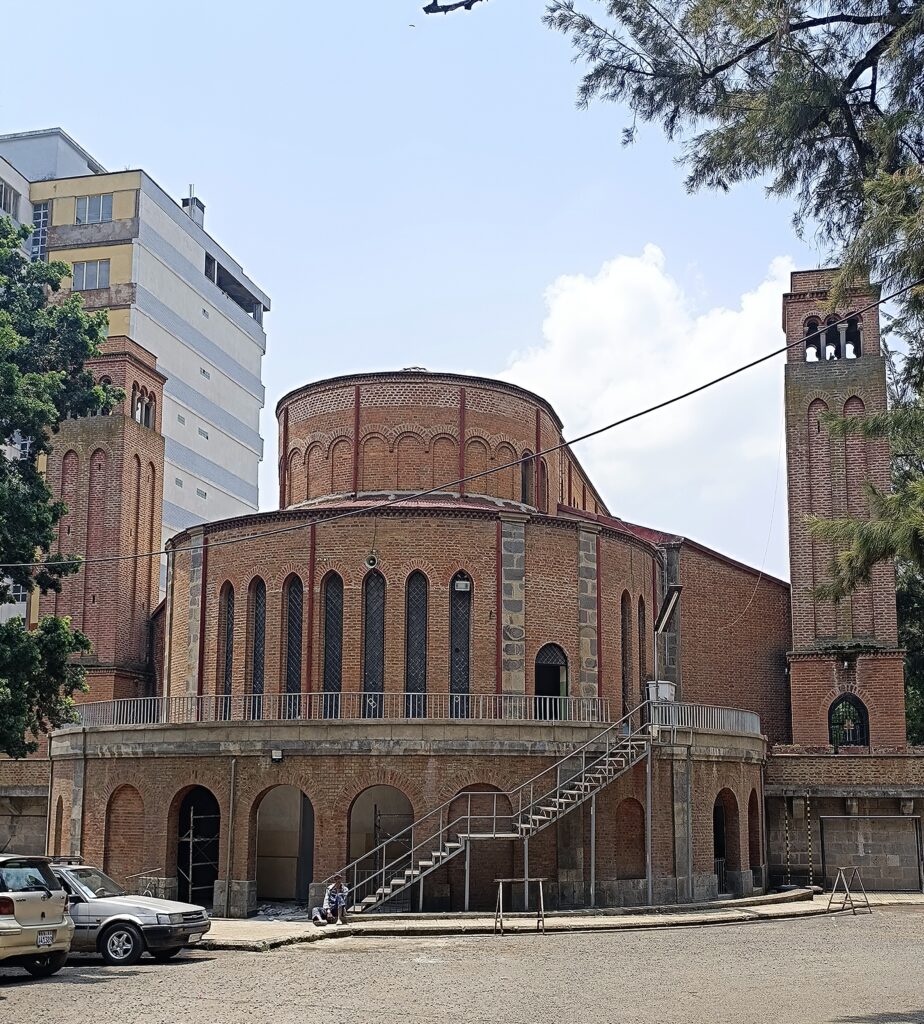
The Holy Savior Catholic Church in Addis Ababa, Ethiopia, is located in the Lagar area, near Meskel Square. It is situated on Churchill Avenue and is often referred by people as the “international parish of Addis Ababa.” The parish is served by the Capuchin brothers. The church holds Masses in Ge’ez, English, Amharic, and Italian on Sundays. The coordinates for the church are approximately 9°01’21.0″N, 38°45’06.4″E. The Church is a metropolitan parish that is well-known for its multicultural and diverse community. It serves various groups, with different masses scheduled according to their specific liturgical rites and cultural backgrounds. The church offers masses in multiple languages, including Ge’ez, Amharic, English, and Italian, to accommodate its local, international, and Italian-speaking communities. This approach makes it a central hub for Catholic communities from various parts of the world who reside in Addis Ababa. On Sundays, the service of Masses is offered from 6:30 – 12:30 and 18:00-19:00. In each Sunday five Masses are celebrated consecutively from 6:30-12:30 and the last one in the afternoon from 18:00-19:00. The first Mass began in Ge’ez language followed by the Mass in Amharic language, then the Mass in English language followed by the Mass in Italian language. The first two Masses, which are the Ge’ez and Amharic ones, are celebrated with the Ethiopian rite while the rest three are celebrated with the Latin rite.  The historical background of this Church goes back more or less to 1938-1940, the time in which Ethiopia was under the occupation of the fascist regime of Mussolini (1937–1942). The Italian government constructed the church as soon as they had established their authority in Addis Ababa for the spiritual benefit of the Italian troops. Simultaneously, a nine-story structure was constructed for the military commanders’ office on the left side of the church. The church was given to Ethiopian Catholic communities after the Italians were forced to leave the country, while the Ethiopian government seized the office building on the left. Once the Church was turned over to the local ecclesiastical authority, the Maltese Capuchin brothers were asked to assist the multinational communities (speaking English, French, and Italian). Soon after, when the Maltese Capuchin brothers chose to depart the nation after serving the communities for a few years, the Ethiopian and Italian Capuchin brothers took their positions. The service expanded to the local communities when the Ethiopians assumed authority, which increased the number of communities. The service for Eritrean migrants also began recently. Five brothers, three chaplains, one parish priest, and one assistant parish priest, have been appointed to this church to serve full-time. Alongside the full-time staff, there are a few brothers who work as part-timers to help with confession and Holy Communion distribution. After learning of the Church’s advantageous location, the brothers assigned to the parish church requested that the superiors expand the property and construct a new community and guest house to host all the brothers who come to Addis for different reasons from all over the nation. In 1972, a three-story structure capable of housing 25 people at a time was completed. Once more, the Vice Provincial office was required when Ethiopia’s General Vice Province was established in 1977. As a result, the site has been further expanded by paying local people to build a new structure that will house the fraternity and vice provincial office. Before the construction was started, the late Cardinal Paulos Tsadwa was asked by the Vice Provincial of the time to verify the location as a Domus Ordinis of the Capuchin Order. Within a few days, the confirmation was given by the Cardinal. After that, construction started right away and was finished in a few years. This led to the establishment of a guest house, the Provincial Office, and a metropolitan parish. The parish church is well organized and it is one of the parishes within the Archi-Eparchy of Addis Ababa in which the participation of the laity and the empowerment of the faithful are fully realized. The parish church is self-sustaining, providing all the basic necessities for the brothers who are serving at the church. Contact person:  Br. Worku Yohannes (Provincial minister) Addressee:         P.O. Box 177                            Holy Savior Catholic Church                            Addis Ababa – Ethiopia                            ethiocapcuria@gmail.com August 11, 2025 By Br. Worku Demeke

A CHURCH WHERE THE CELEBRATION OF HOLY MASSES LASTS FOR SEVEN HOURS: Glimpse of Pastoral Service in the Capuchin Province of Ethiopia Read More »

STANDING FIRM TO SERVE THE MISSION AMIDST CONTINUOUS THREATS: The Capuchin Presence in Burkina Faso in the Heart of Turmoil Bissiga

The Capuchin mission in Burkina Faso is preparing to celebrate its silver jubilee next September. Twenty-five years of evangelical presence have been marked by simplicity, poverty, and fraternity, following in the footsteps of Saint Francis of Assisi. Over the years, the Capuchin Friars Minors have taken root in this Burkinabe land, sharing the joys and sorrows of a suffering people, humbly carrying the light of the Gospel. The fraternity of Bissiga, located in a rural area in the east of the country, is a powerful testament to this missionary commitment. Despite the challenges of insecurity, it embodies a poor Church, serving and close to the people. A YOUNG PARISH WITH REMARKABLE PASTORAL DYNAMISM Forty-five kilometers from Tenkodogo, the parish of Saint Padre Pio in Bissiga was born in a difficult rural context, yet it shines with its dynamism. It brings together approximately 11,500 faithful, spread across nine sub-stations and 48 Basic Christian Communities (BCCs). Although Zaoré is the local language, celebrations are held in Mooré, fostering pastoral unity. The parish is entrusted to the Fraternity of Saint Padre Pio, composed of three Capuchin friars deeply rooted in the mission. Brother Vianney, Brother Corneille, and Brother Ambroise form a close-knit fraternal team, combining experience, youth, and evangelical simplicity. Together, they ensure pastoral care, outreach to families, support for church groups, and daily fraternal service. Their shared witness gives the local Church a tangible face of tenderness, fidelity, and availability. MISSION AMIDST THREATS SINCE ITS ESTABLISHMENT The parish has operated in a climate of constant threat, linked to the growing insecurity in the country. But the year 2025 marked a turning point. On January 7, 14 volunteers for the Defense of the Homeland were murdered in Gounghin, one of the substations. In April, Zânkugdo and Pissalin were also hit. On April 26, exchanges of fire between soldiers and armed groups took place a few steps from the parish center. Despite these trials, the Capuchin friars of Bissiga remained steadfast, refusing to give in to fear. Faithful to their vocation as pastors, they continued catechesis, visits to the sick, and celebrations, often in perilous conditions. At the Easter Vigil, 79 adults received the sacraments of Christian initiation, in a climate of faith and spiritual resistance. A Forced Exodus, a Mission Continued With the security situation becoming critical, the diocesan administration ordered the evacuation of the parish at the end of April. Nearly 95% of the population fled Bissiga, often on foot, with what little they could carry. The brothers, supported by the local population, also left the parish center, with heavy hearts but peace of mind. Taking refuge in Tenkodogo, they did not abandon their people. On May 8, a mass brought together the displaced people of Bissiga. Pastoral care continued. The children were prepared and then received the sacraments of Christian initiation at the cathedral from the hands of Bishop David Koudougou, the new bishop of the diocese. Moved by their missionary zeal, Bishop Koudougou entrusted the brothers with new missions: running the diocesan pastoral center, participating in the life of the cathedral parish, and providing spiritual support to the displaced. A FRATERNITY, A WITNESS TO FIDELITY AND HOPE The Fraternity of Saint Padre Pio, even in exile, remains at the service of the people of God. Its history is that of a Church that refuses to be silent, of a Gospel proclaimed in tears but with invincible hope. Despite insecurity, human losses, massive displacement, and uncertainty, the brothers have chosen to remain close to their people, rooted in prayer, alive in fraternity, and creative in their service. Even today, they carry Bissiga in their hearts. Their silence is prayer, their commitment is light, and their presence is hope. In the face of violence, they respond with God’s tenderness. In the face of chaos, they build bridges of peace and consolation. They appeal to us: “Keep us in your prayers, so that the light of Christ may continue to shine, even in the heart of darkness.”   In summary, Bissiga’s story is part of the broader story of the Capuchin mission in Burkina Faso, which will celebrate its 25th anniversary this September. Twenty-five years of proclaiming the Gospel in simplicity, twenty-five years of fraternal life among the poor, twenty-five years of fidelity to the missionary spirit of Saint Francis of Assisi. In Bissiga, this fidelity took the form of brothers standing firm in the storm, standing in solidarity with a displaced people, sowers of hope in the heart of the night. Their presence, even in exile, reminds us that the Gospel does not fade under threat: it becomes light in the darkness, tenderness in pain, perseverance in trial. In this Jubilee season, the Fraternity of Saint Padre Pio reminds us, through its silent but eloquent witness that the mission continues, that hope endures, and that evangelical fraternity is stronger than fear. Contact person: Addresses: Peace and Goodness! August 11, 2025 By Bro. Narcise Yoda, OFMCap
STANDING FIRM TO SERVE THE MISSION AMIDST CONTINUOUS THREATS: The Capuchin Presence in Burkina Faso in the Heart of Turmoil Bissiga Read More »

AN INITIATIVE FOR THE REALISATION OF A ‘COSMIC FRATERNITY’: St. Padre Pio Centre of Pretoria, South Africa

St Padre Pio Centre of Pretoria came to reality by the initiative of br. John Corriveau, General Minister, OFM Cap as a formation house of lay brothers of Africa. The building of the Padre Pio Formation House began in June 1998, and was formally blessed and opened in March 2000. Soon after, a formation team was established and lay brothers, from all Capuchin circumscriptions in Africa, were admitted. The formation program was led and subsidized directly by the General Curia of the Order. The centre gained further importance when it hosted the Damietta Peace Initiative in 2005. As a result, the centre became very symbolic and hub of all the efforts that are made to realise the ‘Cosmic Fraternity’ at the level of Africa.  The Damietta Peace Initiative, the first idea of an African Franciscan Peace initiative, came as a result of two papers: “The Challenge of Nonviolence” and “Cosmic Kinship- The Unifying Principle for the new Africa”. These two papers were delivered by Fr. Donal O’Mahony OFM Cap at a study Day for Capuchin provincials from sub-Saharan Africa in Bulawayo, Zimbabwe, May 2002. The invitation came from the President of the East African Capuchin Conference, Fr Sean Cahill OFM Cap. In one of the papers Fr Donal said: ” It is in the realm of ethical and moral values that Africa must point itself toward if it is to build a more human, more peaceful and more environmentally sustainable continent. He then introduced and developed the Franciscan values of non-violence, reconciliation and ‘cosmic Fraternity’. Acknowledging that any solutions must primarily rest with Arican people themselves, yet, Franciscans with their unique continental- wide connections must think creatively how these values might trickle down to a village level. Could every Capuchin Friary and every domicile of the entire Franciscan family, he wondered, become “places” where the Gospel and the Globe are brought together for all peoples? From these ideas rose a Peace Project, to be later called, the ‘Damietta Peace Initiative’. The project formally found an office at St Padre Pio Formation House, Pretoria in 2005, and functioned from there for several years. The idea and impact of the project still resonates positively among the other peace-making ministries. Unfortunately, both initiatives didn’t continue as they were planned for various changing circumstances. In 2014, the house evolved into a Retreat and Spirituality Centre which has become very popular and well attended by various Christian Groups. August 14, 2025 By Br. Anstey Kay Secretary of the Custudy of South Africa

AN INITIATIVE FOR THE REALISATION OF A ‘COSMIC FRATERNITY’: St. Padre Pio Centre of Pretoria, South Africa Read More »