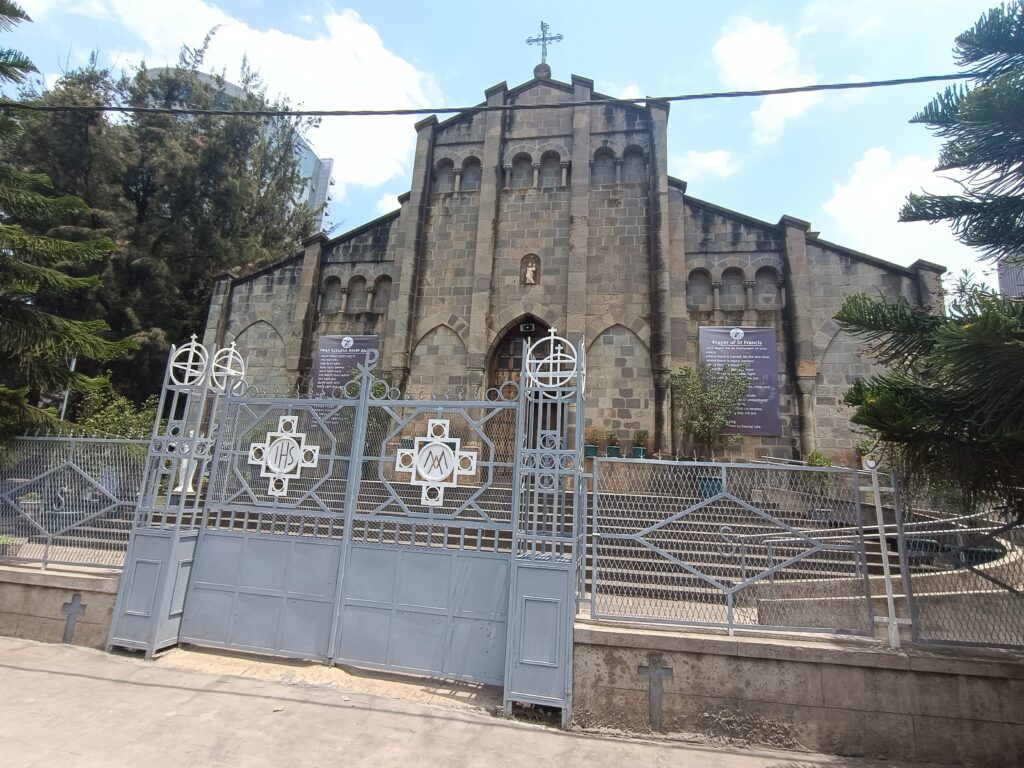
The Holy Savior Catholic Church in Addis Ababa, Ethiopia, is located in the Lagar area, near Meskel Square. It is situated on Churchill Avenue and is often referred by people as the “international parish of Addis Ababa.” The parish is served by the Capuchin brothers. The church holds Masses in Ge’ez, English, Amharic, and Italian on Sundays. The coordinates for the church are approximately 9°01’21.0″N, 38°45’06.4″E.
The Church is a metropolitan parish that is well-known for its multicultural and diverse community. It serves various groups, with different masses scheduled according to their specific liturgical rites and cultural backgrounds. The church offers masses in multiple languages, including Ge’ez, Amharic, English, and Italian, to accommodate its local, international, and Italian-speaking communities. This approach makes it a central hub for Catholic communities from various parts of the world who reside in Addis Ababa. On Sundays, the service of Masses is offered from 6:30 – 12:30 and 18:00-19:00. In each Sunday five Masses are celebrated consecutively from 6:30-12:30 and the last one in the afternoon from 18:00-19:00. The first Mass began in Ge’ez language followed by the Mass in Amharic language, then the Mass in English language followed by the Mass in Italian language. The first two Masses, which are the Ge’ez and Amharic ones, are celebrated with the Ethiopian rite while the rest three are celebrated with the Latin rite.
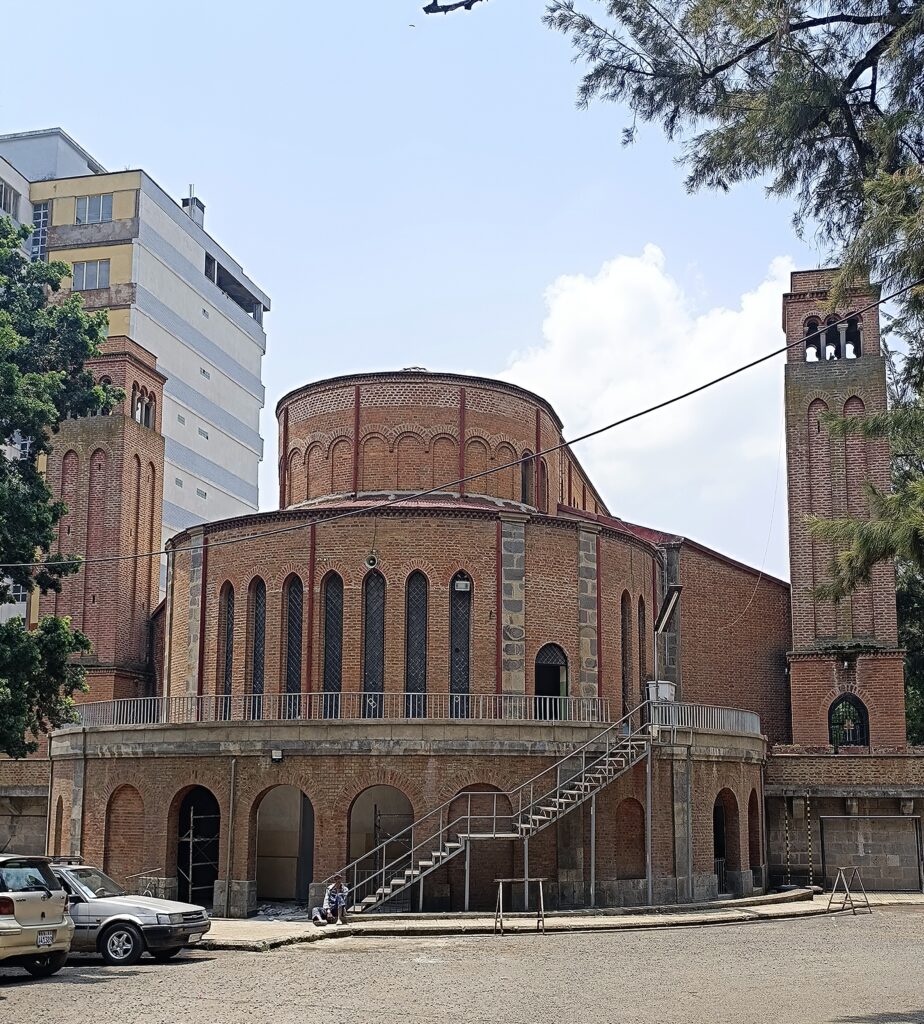
The historical background of this Church goes back more or less to 1938-1940, the time in which Ethiopia was under the occupation of the fascist regime of Mussolini (1937–1942). The Italian government constructed the church as soon as they had established their authority in Addis Ababa for the spiritual benefit of the Italian troops. Simultaneously, a nine-story structure was constructed for the military commanders’ office on the left side of the church. The church was given to Ethiopian Catholic communities after the Italians were forced to leave the country, while the Ethiopian government seized the office building on the left. Once the Church was turned over to the local ecclesiastical authority, the Maltese Capuchin brothers were asked to assist the multinational communities (speaking English, French, and Italian). Soon after, when the Maltese Capuchin brothers chose to depart the nation after serving the communities for a few years, the Ethiopian and Italian Capuchin brothers took their positions.
The service expanded to the local communities when the Ethiopians assumed authority, which increased the number of communities. The service for Eritrean migrants also began recently. Five brothers, three chaplains, one parish priest, and one assistant parish priest, have been appointed to this church to serve full-time. Alongside the full-time staff, there are a few brothers who work as part-timers to help with confession and Holy Communion distribution.
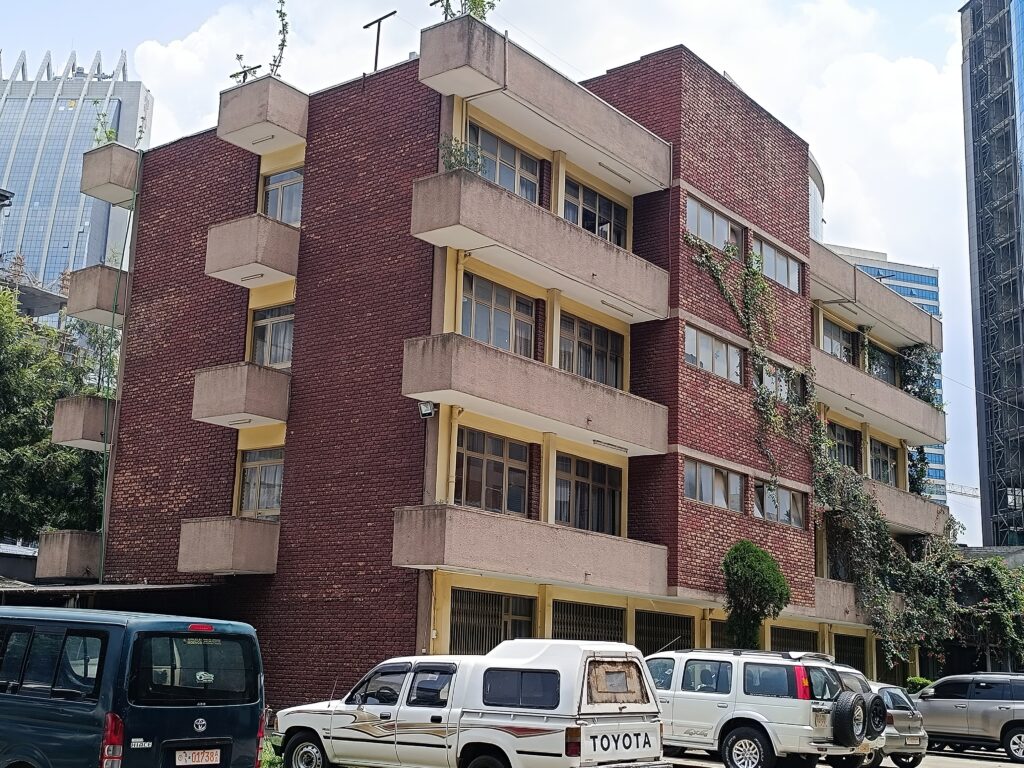
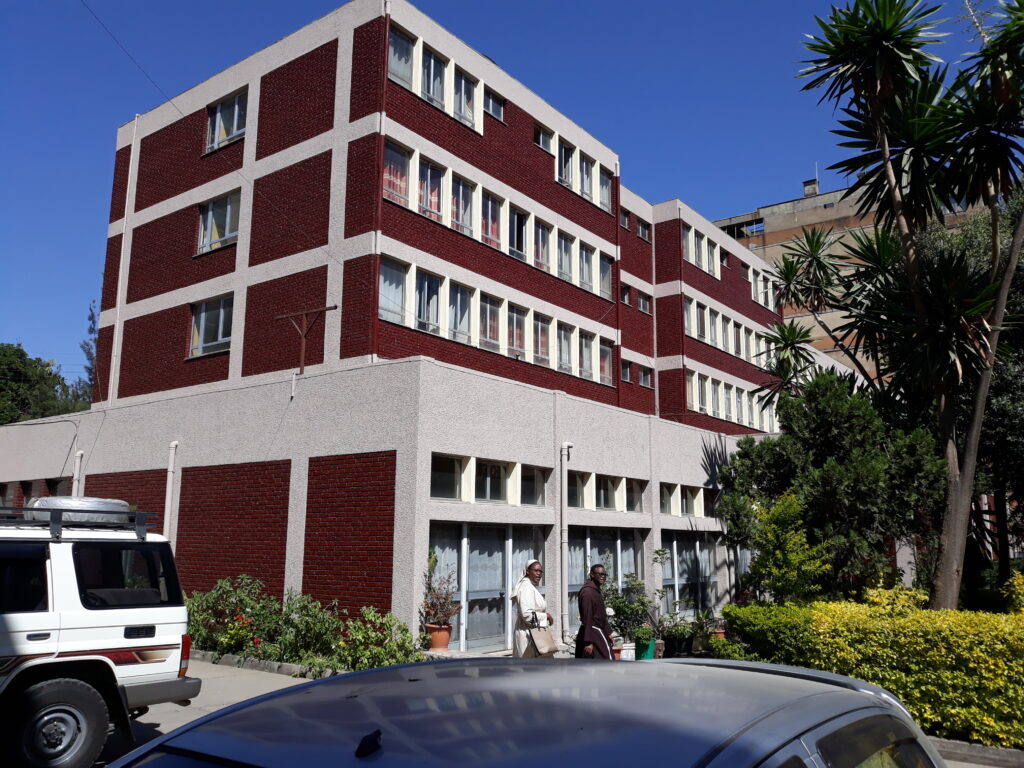
After learning of the Church’s advantageous location, the brothers assigned to the parish church requested that the superiors expand the property and construct a new community and guest house to host all the brothers who come to Addis for different reasons from all over the nation. In 1972, a three-story structure capable of housing 25 people at a time was completed. Once more, the Vice Provincial office was required when Ethiopia’s General Vice Province was established in 1977. As a result, the site has been further expanded by paying local people to build a new structure that will house the fraternity and vice provincial office. Before the construction was started, the late Cardinal Paulos Tsadwa was asked by the Vice Provincial of the time to verify the location as a Domus Ordinis of the Capuchin Order. Within a few days, the confirmation was given by the Cardinal. After that, construction started right away and was finished in a few years. This led to the establishment of a guest house, the Provincial Office, and a metropolitan parish.
The parish church is well organized and it is one of the parishes within the Archi-Eparchy of Addis Ababa in which the participation of the laity and the empowerment of the faithful are fully realized. The parish church is self-sustaining, providing all the basic necessities for the brothers who are serving at the church.
Contact person: Br. Worku Yohannes (Provincial minister)
Addressee: P.O. Box 177
Holy Savior Catholic Church
Addis Ababa – Ethiopia
August 11, 2025
By Br. Worku Demeke