
1. Beginnings
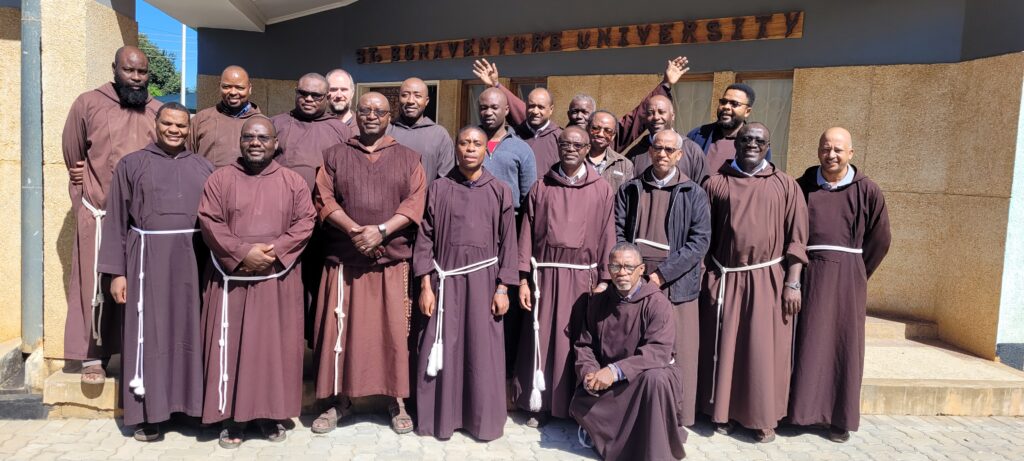
St. Bonaventure University traces its roots to an earlier collaborative venture between the three families of the Order of Friars Minor in the historic town of Livingstone in Zambia, just a short distance from the world-famous Victoria Falls, or to give the Falls their local name, Mosi O Tunya. It was in 1978 that the Zambian Capuchin Chapter discussed the possibility of co-operation with other religious institutes in Zambia to establish joint facilities for post- noviciate formation. Nothing came of this immediately, but in 1981 the then South-East African Capuchin Association (SEACA) explored the idea of establishing a house for philosophical studies in Zambia, with English as a common Language. This idea was adopted by the SEACA the following year.
In the same year, 1982, the two Conventual Custodies in Zambia expressed an interest in participating in this venture. Further meetings in 1983 resulted in a substantial degree of agreement concerning the aims and programmes of such a venture. In 1986 the Friars Minor in Zimbabwe and of the then Vicariate of St. Francis in Africa inquired about their possible participation, and all welcomed this. It is out of such meetings that the Franciscan House of Studies opened in Livingstone Zambia in May 1984 with five students. It is, therefore, from this small beginning that the present St. Bonaventure College-Franciscan Formation Centre takes its origin.
2. The College
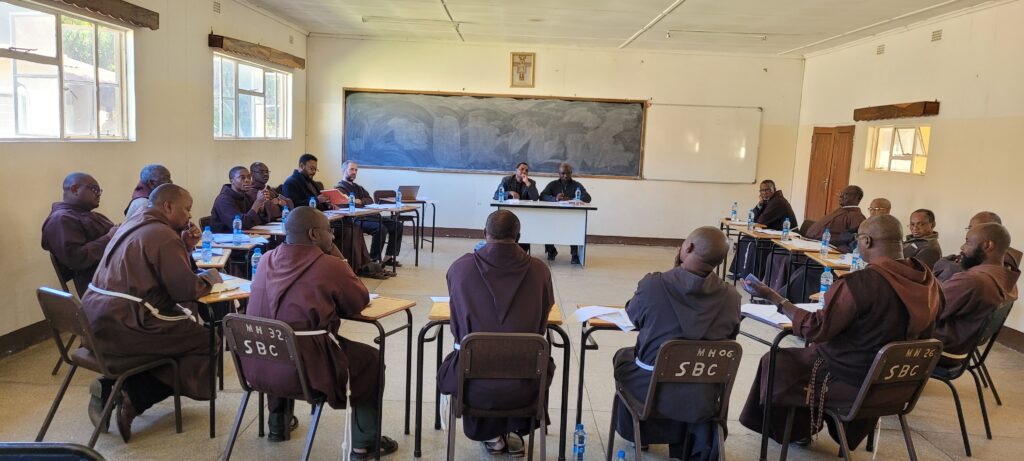
As the number of staff had continued to grow it soon became apparent that the premises in Livingstone would need to be expanded or a new Institute founded. After a series of meetings between the representatives of the three families of Friars Minor with the consent of the Zambia Episcopal Conference St. Bonaventure College – Franciscan Formation Centre was founded in Lusaka. On 20th January 1988 the Ministers of the three Franciscan families in Southern Africa signed a formal agreement to found St. Bonaventure College.
Construction began in November 1988 and the cornerstone of the College was blessed by H.E. Josef Cardinal Tomko, Prefect of the Congregation for the Evangelization of the Peoples, on 5th May 1990, in the presence of all the bishops of the Zambia Episcopal Conference, numerous friars and local people. The first students moved from Livingstone to Lusaka in July 1991 and classes commenced in November the same year. Thus, SBC came to life. On the 27th June 1992 the three Ministers General of the Order of Friars Minor officially blessed the College. Then, from 9th June 1994 St. Bonaventure College was registered as a Private School by the Ministry of Education of the Zambian government, and renewed every year.
Over the years, up to twenty jurisdictions of Friars Minor in English and Portuguese speaking Africa have involved themselves in this project. It is worthwhile to mention here that other Religious Congregations have shown an interest of joining the College. The major Superiors, in different annual meetings of the Board of Governors unanimously decided to open its doors to non-Franciscan Religious Institutes. A good number of students from Mariannhill Missionaries (CMM), Divine Word Missionaries (SDV), Oblates of Mary Immaculate (OMI), Passionist Fathers (CP), Salesians of Don Bosco (SDB) and others study at the University.
3. The Library
It cannot be denied that a library is a corner stone of every institution. Its main purpose is to help its users to have access to the relevant information for learning, teaching and research purposes. Against this backdrop, SBU Library, also known as John Hardings Library, exists to provide quality materials and services which fulfil educational and informational needs of the entire community in a conducive environment.
In order to achieve all these goals, the Library Department has continued to improve the environment and its collection to meet all the users’ needs. Currently, the library has more than 30000 information sources that include books and journals. All these are automated and fully secured. Further, the library has a reliable internet facility. In addition, John Harding’s Library is now a fully member of the Zambia Library Consortium. Through the Consortium, the library has now subscribed to various Databases for E-Journals that our users are accessing remotely. Our next plan which is in the pipeline is to subscribe to E-Library.
4. Affiliation to the Pontifical University Antonianum
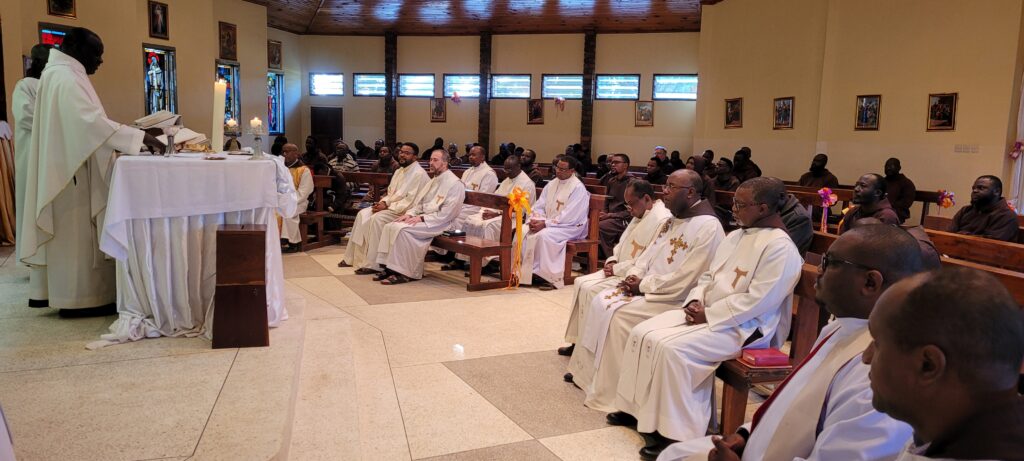
Officially St. Bonaventure College was affiliated to the Pontifical University Antonianum (PUA), Rome in 2000 when the affiliation was granted ad experimentum for five years (2000-2005). By December 2005 we applied for its renewal and it was granted ad biennium. On 10th April 2008 the Congregation of Catholic Institutes confirmed the affiliation to PUA donec aliter provideatur.
5. St. Bonaventure University
Officially St. Bonaventure College was raised to the status of University on 13th September 2018 by the Zambian Ministry of Education (MOE). It was also required to register all its programmes for accreditation with the Higher Education Authority (HEA). St. Bonaventure University has met all the required standards for a higher learning institution and the philosophy programme is already registered with HEA.
6. Current Programmes
Currently St. Bonaventure University has four programmes that are running. These
are:
- BA in Philosophy: Three years
- Diploma in Philosophy: Two years
- Diploma in Philosophy and Religious Studies: Three years
- Certificate in Franciscan Religious Studies: One years
7. Prospective Programmes
The following programmes will soon commence at St. Bonaventure University.
- BA in Religious and Civic Education: Four years
- Post Graduate Diploma in Professional and Applied Ethics: One year
- Post Graduate Diploma in Conflict Resolution: Two years
- Post Graduate Diploma in Teaching/Lecturing Methodology: One year
April 9, 2025
By Br. Owen Mwene