“Forming Franciscan Capuchin Witnesses for the Church in Africa and Beyond”
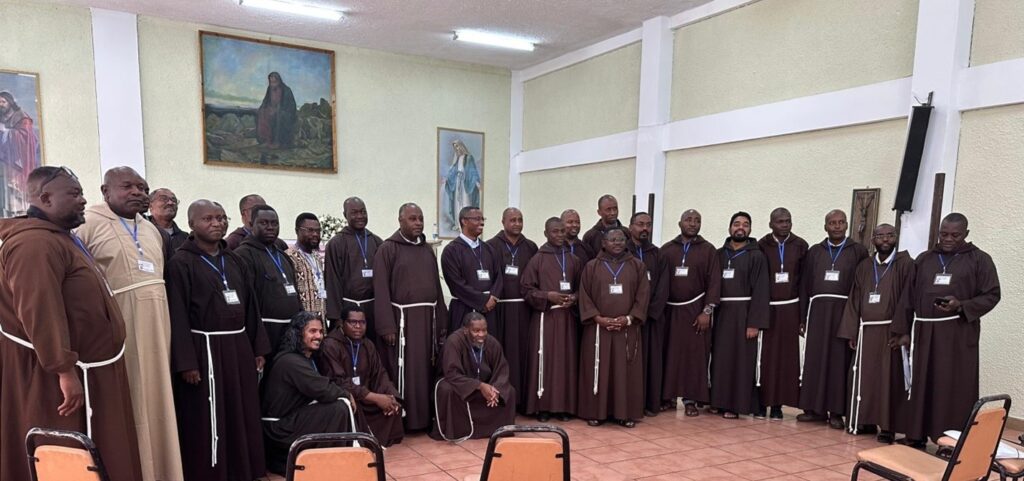
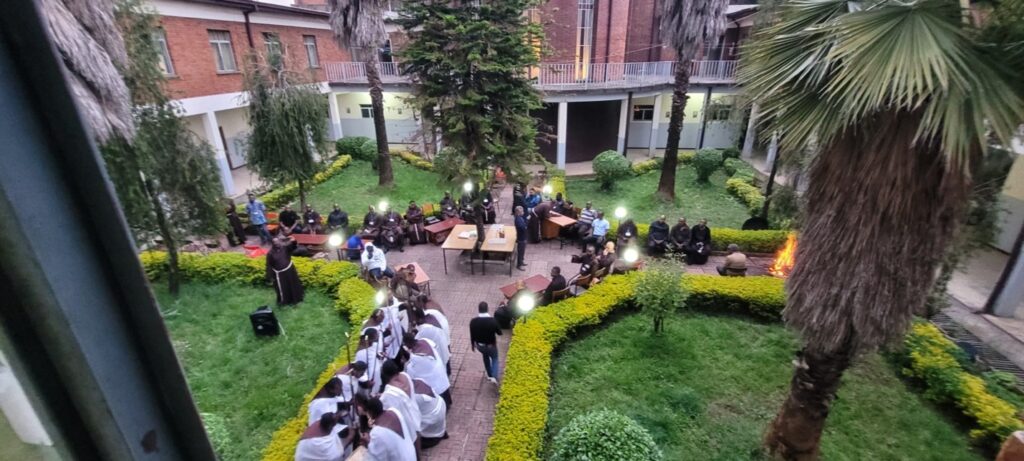
The formation course for African Capuchin formators commenced with profound earnestness on 20 April 2026 in Addis Ababa, marking a grace-filled moment for the Order in Africa. The program will continue its formative journey till 02 May 2026, sustaining its mission of renewal and inspiration among those entrusted with the responsibility of formation. This Schola Fratrum unfolds under the guiding theme: “Forming Franciscan Capuchin Witnesses for the Church in Africa and Beyond”. It is a call to deepen our identity as lesser brothers, rooted in the Gospel and responsive to the needs of the Church and the world.
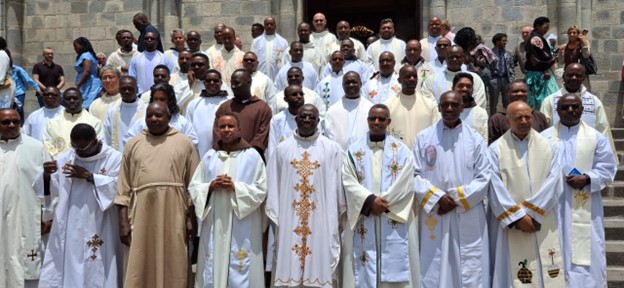
The tone of the gathering was beautifully set through the Eucharistic Celebration—the source and summit of our fraternal life—from which the brothers drew spiritual strength to begin this journey. In the breaking of the Bread, the fraternity rediscovered its foundation in Christ, the perfect Formator. Br. Gabreworld delivered a deeply inspiring homily, drawing richly from the Word of God. He exhorted the formators to anchor their lives and ministry firmly in the Gospel, reminding them that authentic formation flows from a life personally transformed by the Word. His message called the brothers to become living witnesses—men whose lives speak before their words.
During the inaugural session, Br. Gabreworld, once again illuminated the essential role of the formator. He emphasized the role of a formator – a companion on the journey—one who walks with the formees in discernment, humility, and fraternity. Central to this mission is the recognition that the Holy Spirit is the primary Formator, gently shaping hearts and guiding each brother toward conformity with Christ in the Capuchin Franciscan way. Br. Patrice with his presence well supported the thoughts expressed by Br. Gabreworld. The presence of Brs. Abera, Waldheim, Joaquim and Kilian, alongside other resource persons who journeyed from various regions to Addis Ababa, highlighted the Order’s deep commitment to formation. Their participation reflects a shared responsibility to nurture the minds, hearts, and spirits of those called to our life of minority, fraternity, and contemplative presence in the world.
Aware of the vital importance of formation for the vitality and future of the Order, the brothers have generously committed themselves—heart, mind, and strength—to this responsibility of being exemplary formators. With renewed zeal, they seek to accompany both initial and ongoing formation, so that each brother may embody the Franciscan charism in word and deed. In this spirit, Schola Fratrum Africa stands as a beacon of hope: forming brothers who, filled with the Holy Spirit, will bear credible witness to the Gospel by living the Word of God—faithfully, joyfully, and prophetically—in Africa and beyond.
This formation course is designed for formators involved in both initial and ongoing formation in African Capuchin jurisdictions, with special emphasis on initial formation as the foundational stage of Capuchin life. Through reflection on current formative challenges, participants will examine human, Franciscan, biblical, and socio-cultural dimensions of formation, assess the continuity between initial and ongoing formation – a help to identify shared priorities and concrete pathways for strengthening formation structures across African jurisdictions.
1st DAY: Monday 20 April
- Date of Arrival
2nd Sy: TUESDAY 21 APRIL
- Presentation of the course and self-introduction of participants
- Discernment and accompaniment in the Bible (Br. Serge Mbrimandji)
In a formation context, discernment and accompaniment emerge as essential biblical foundations for guiding persons in their human, spiritual, and vocational growth. Sacred Scripture presents discernment as a sustained process of listening to God’s Word, interpreting life experiences in the light of faith, and responding freely to God’s call. Accompaniment, in turn, is revealed as a patient and compassionate ministry of presence, modeled by God’s faithful guidance of Israel and fulfilled in Jesus’ attentive walking with his disciples. This session explores key biblical texts to show how discernment and accompaniment function together as formative dynamics, fostering maturity, responsibility, and freedom in those being formed. By grounding formation practices in the biblical tradition, the presentation will highlight how Scripture continues to inspire authentic pathways of growth, accountability, and mission within the life of the Church.
3rd DAY: WEDNESDAY, 22 APRIL
- Human Formation, Inner Healing & Integration (Br. Charles Alphonse)
Human formation is a progressive process that unfolds through the stages of Capuchin formation as a whole (initial and ongoing), with recurring human goals at each stage to cherish the gift of life, heal the wounds, manifest goodness and begin the process of integration. It is progressive accompanying of the brother from initial formation into ongoing formation. It addresses:
- psycho‑affective maturity,
- relational capacity,
- intercultural sensitivity,
- personal responsibility and freedom,
- healing and integration of personal history in his vocation.
- Understanding the nature, structure and essence of formation
These elements are revisited and deepened at different moments, rather than completed once and for all. Thus, the stages of formation in Capuchin formative journey are intentionally designed and structured to bring about integral formation and to guide a friar from initial discernment to lifelong commitment. These stages try to integrate the five dimensions of Capuchin formation—human, spiritual, intellectual, pastoral, and fraternal, which presents at the same time several challenges, especially given the holistic and deeply relational nature of Capuchin life. Each stage is designed to build upon the previous one, ensuring a holistic and gradual integration into Capuchin life.
- Cultural questions in Africa (Br. Kilian)
Culture plays a decisive role in the formation of Capuchin friars in Africa, shaping personal identity, community life, and the way the Franciscan charism is received and lived. Within the African context, formation is called to engage deeply with local cultural values such as communal belonging, respect for elders, storytelling, spirituality of life, and a strong sense of relationship. It is also offering critical discernment in the light of the Gospel and the Capuchin tradition. This reflection explores the dynamic relationship between culture and formation in African Capuchin settings, highlighting both the richness and the challenges that arise when diverse cultural expressions encounter the evangelical counsels, fraternal life, and mission. By fostering a dialogical and incarnational approach, Capuchin formation in Africa is invited to integrate cultural identity and Franciscan values in a way that promotes human maturity, evangelical freedom, and faithful service to the Church and society.
4th DAY: THURSDAY, 23 APRIL
- Vocational Discernment and motivation (Br. Kilian Ngitir)
Vocational discernment and motivation in religious formation refer to two closely connected processes that help a person understand, embrace, and faithfully live a call to religious life.
- Vocational discernment is the prayerful and reflective process by which a person seeks to recognize whether God is calling him to a particular way of life—such as priesthood, religious (consecrated) life, marriage, or single life. In religious formation, vocational discernment is not a one-time decision but an ongoing journey. It continues from the initial attraction to religious life through stages such as postulancy, novitiate, and temporary vows. The Church understands discernment as a process that gradually uncovers the deepest desires placed by God in a person’s heart and tests their authenticity through prayer, community life, spiritual direction, and lived experience.
- Motivation refers to the inner reasons or driving forces that lead a person to choose and persevere in religious life. In religious formation, the Church pays close attention to motivation because right motivation is essential for fidelity and perseverance.
In religious formation, both are carefully nurtured to help individuals live an authentic, joyful, and lasting vocation.
- To form our young ones to grow both in human and Franciscan relationships (Br. Kamilus Bajuta)
This session aims to situate initial formation within the broader vision of Capuchin formation today, helping formators read African realities as both challenge and call, and to reaffirm initial formation as the decisive foundation for Capuchin identity, fraternity, and mission. This session will help us to motivate/arise the spirit of open and genuine discussion on the concrete formative realities and challenges of the Continent based on lived experiences of each jurisdiction and pave the way forward together.
5th DAY: FRIDAY, 24 APRIL
- Formative challenges in Africa and the way forward (Br. Hailegebriel M.)
Formation in Africa today unfolds within a context marked by great vitality, cultural richness, and growing vocations, alongside complex human, social, and ecclesial challenges. These include questions of human maturity, cultural integration, intercultural community life, economic vulnerability, and the need for qualified and collaborative formation teams. This reflection examines key formative challenges emerging in the African context. It proposes also pathways forward rooted in discernment, accompaniment, and a dialogical engagement between culture, Gospel values, and the charism of religious life. By strengthening initial formation, investing in formators, and fostering shared responsibility among jurisdictions, formation in Africa can continue to nurture integrated, free, and mission-oriented consecrated persons, capable of responding faithfully and creatively to the needs of the Church and society.
- Celebrating and animating the lay dimension of our vocation (Br. Tatenda Anthon)
The main objective of this session is to deepen common understanding about our vocation as brothers. As religious, our one and unique vocation is to be lessor/minor brothers – lay and clerics alike. There is no dichotomy between the two. Being lay or clerics are only the two expressions of our one and unique vocation. This formation course aims to spread this understanding throughout our fraternities.
6th DAY: SATURDAY, 25 APRIL
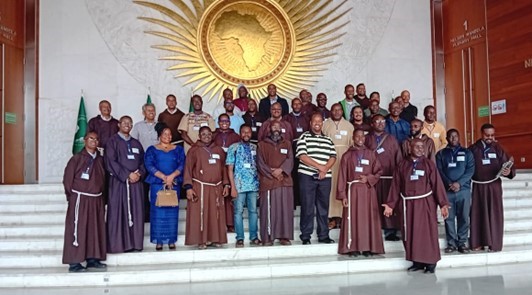
- SOCIAL VISIT (AU headquarters)
7th DAY: SUNDAY, 26
- Holy mass with the international community in the main parish Church (Br. Kilian Ngitir)
- PERSONAL TIME
8th DAY: MONDAY, 27 APRIL
- Formation and fraternal economy (Br. Worku Demeke)
The main objective of this session is to reflect together on our understanding about the fraternal economy and stewardship. How do we understand our responsibilities towards our common goods/resources? How do we manage them? What are the challenges we face regarding this responsibility? The issue of fraternal economy and stewardship has repeatedly emerged as a significant concern in the reports after the formative visits to the continent. Integrating the stewardship of fraternal economy into initial formation program would enhance awareness in our young formees. The input has been organized as follows:
- Theoretical references of “Fraternal economy”;
- The concrete situation in which we find ourselves as Franciscan Capuchins;
- Pedagogical Reflation;
- Methodological choice.
9th DAY: TUESDAY, 28 APRIL
- Mission and Formation (Br. Mario Svaldo)
“Mission and Formation” is consistently used as a paired concept—formation exists for mission, and mission shapes how formation is designed and lived. Mission and formation are inseparable. Formation is not primarily about internal competence or academic preparation, but about shaping friars who can live the Capuchin charism in concrete missionary contexts, marked by poverty, interculturality, and service to the Church and world. Mission is central to Capuchin identity. Living the Gospel and making Christ present through fraternity, prayer, pastoral ministry, and service to those on the margins lies at the heart of our vocation. This session will help us to rediscover our missionary identity as Capuchins and to revisit/re-examine our formative programs regarding our mission and bring some updating if necessary.
10th DAY: WEDNESDAY 29 APRIL
- Affectivity challenges (Br. Waldheim)
In Capuchin formation, affective challenges arise primarily from unresolved personal wounds, individualism, and formation models that neglect emotional and relational dimensions. Addressing these challenges requires integrating affective formation into every stage, prioritizing accompaniment, and forming brothers who can live fraternity with emotional freedom and responsibility. Initial formation addresses affective and psycho‑affective dimensions, while ongoing formation helps friars to continue to grow in affective maturity, rediscover identity and respond to the needs of the Church and the world. Affective maturity is therefore not optional, nor limited to one stage, but belongs to both initial and ongoing formation.
- Formation and Information Technology (Br. Joaquim Hangalo)
Religious Formation and Information Technology are complementary when properly integrated. Religious formation shapes the person and vocation, while IT can provide tools for study, service, and evangelization. When discernment, discipline, and ethics guide technology use, the goal remains holiness, service, and mission. This session will:
– Reflect how information technology can support, rather than distract from, human, spiritual, intellectual, and pastoral formation in seminaries.
– Reflect on the challenge of maintaining prayer, contemplation, and interior silence while living in a digitally connected world.
– Discuss how responsible use of information technology contributes to maturity, discipline, and moral integrity in religious formation.
– Analyze the importance of discernment in the use of technology during seminary formation, emphasizing freedom, self‑control, and vocation.
- Building a Culture of Safeguarding: Strengthening Our Institutional Readiness, (Br. Mathewos Ajabo)
Safeguarding is not just a policy – it is a commitment to protect the dignity and well-being of every person, especially the most vulnerable. For Capuchin formators in Africa, this responsibility is central to our mission of forming future friars in a spirit of integrity, care, and accountability. As society faces growing challenges related to abuse and exploitation, our institutions must be equipped to respond effectively and prevent harm. This session aims at creating awareness about the reality of abuses and exploitation in various forms and engaging ourselves in creating safe environments in our communities and institutions integrating safeguarding as part of our formation program.
11th DAY: THURSDAY, 30 APRIL
- Values and Experiences of JPIC in Formation (Br. Scaria Kaloor)
In Capuchin formation, JPIC is a formative value lived through concrete experiences: encounter with the poor, commitment to justice and peace, and care for creation. These experiences shape the human, spiritual, and missionary maturity of brothers and safeguard the charism from clericalism and abstraction. JPIC values are closely connected to cultural and social realities, especially in Africa:
- The African context is marked by poverty, inequality, injustice, migration, and social wounds, which deeply affect candidates and friars.
- The General Chapter report (2024) warns that formation which ignores these realities risks distorting the charism and weakening the sense of belonging to the Order.
12th DAY: FRIDAY 01 MAY
- EVALUATION
13th DAY: Saturday 02 MAY
- DEPARTURE