Worku Demeke

A CHURCH WHERE THE CELEBRATION OF HOLY MASSES LASTS FOR SEVEN HOURS: Glimpse of Pastoral Service in the Capuchin Province of Ethiopia

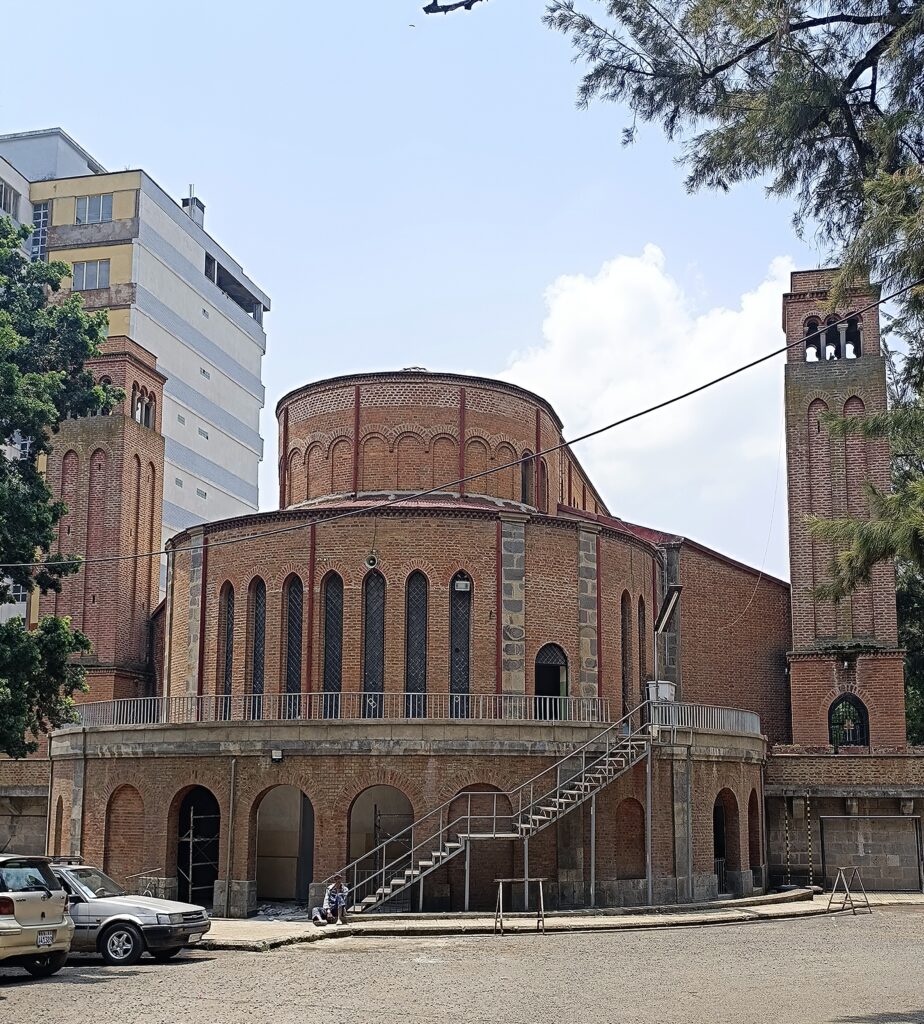
The Holy Savior Catholic Church in Addis Ababa, Ethiopia, is located in the Lagar area, near Meskel Square. It is situated on Churchill Avenue and is often referred by people as the “international parish of Addis Ababa.” The parish is served by the Capuchin brothers. The church holds Masses in Ge’ez, English, Amharic, and Italian on Sundays. The coordinates for the church are approximately 9°01’21.0″N, 38°45’06.4″E. The Church is a metropolitan parish that is well-known for its multicultural and diverse community. It serves various groups, with different masses scheduled according to their specific liturgical rites and cultural backgrounds. The church offers masses in multiple languages, including Ge’ez, Amharic, English, and Italian, to accommodate its local, international, and Italian-speaking communities. This approach makes it a central hub for Catholic communities from various parts of the world who reside in Addis Ababa. On Sundays, the service of Masses is offered from 6:30 – 12:30 and 18:00-19:00. In each Sunday five Masses are celebrated consecutively from 6:30-12:30 and the last one in the afternoon from 18:00-19:00. The first Mass began in Ge’ez language followed by the Mass in Amharic language, then the Mass in English language followed by the Mass in Italian language. The first two Masses, which are the Ge’ez and Amharic ones, are celebrated with the Ethiopian rite while the rest three are celebrated with the Latin rite.  The historical background of this Church goes back more or less to 1938-1940, the time in which Ethiopia was under the occupation of the fascist regime of Mussolini (1937–1942). The Italian government constructed the church as soon as they had established their authority in Addis Ababa for the spiritual benefit of the Italian troops. Simultaneously, a nine-story structure was constructed for the military commanders’ office on the left side of the church. The church was given to Ethiopian Catholic communities after the Italians were forced to leave the country, while the Ethiopian government seized the office building on the left. Once the Church was turned over to the local ecclesiastical authority, the Maltese Capuchin brothers were asked to assist the multinational communities (speaking English, French, and Italian). Soon after, when the Maltese Capuchin brothers chose to depart the nation after serving the communities for a few years, the Ethiopian and Italian Capuchin brothers took their positions. The service expanded to the local communities when the Ethiopians assumed authority, which increased the number of communities. The service for Eritrean migrants also began recently. Five brothers, three chaplains, one parish priest, and one assistant parish priest, have been appointed to this church to serve full-time. Alongside the full-time staff, there are a few brothers who work as part-timers to help with confession and Holy Communion distribution. After learning of the Church’s advantageous location, the brothers assigned to the parish church requested that the superiors expand the property and construct a new community and guest house to host all the brothers who come to Addis for different reasons from all over the nation. In 1972, a three-story structure capable of housing 25 people at a time was completed. Once more, the Vice Provincial office was required when Ethiopia’s General Vice Province was established in 1977. As a result, the site has been further expanded by paying local people to build a new structure that will house the fraternity and vice provincial office. Before the construction was started, the late Cardinal Paulos Tsadwa was asked by the Vice Provincial of the time to verify the location as a Domus Ordinis of the Capuchin Order. Within a few days, the confirmation was given by the Cardinal. After that, construction started right away and was finished in a few years. This led to the establishment of a guest house, the Provincial Office, and a metropolitan parish. The parish church is well organized and it is one of the parishes within the Archi-Eparchy of Addis Ababa in which the participation of the laity and the empowerment of the faithful are fully realized. The parish church is self-sustaining, providing all the basic necessities for the brothers who are serving at the church. Contact person:  Br. Worku Yohannes (Provincial minister) Addressee:         P.O. Box 177                            Holy Savior Catholic Church                            Addis Ababa – Ethiopia                            ethiocapcuria@gmail.com August 11, 2025 By Br. Worku Demeke
A CHURCH WHERE THE CELEBRATION OF HOLY MASSES LASTS FOR SEVEN HOURS: Glimpse of Pastoral Service in the Capuchin Province of Ethiopia Read More »

STANDING FIRM TO SERVE THE MISSION AMIDST CONTINUOUS THREATS: The Capuchin Presence in Burkina Faso in the Heart of Turmoil Bissiga

The Capuchin mission in Burkina Faso is preparing to celebrate its silver jubilee next September. Twenty-five years of evangelical presence have been marked by simplicity, poverty, and fraternity, following in the footsteps of Saint Francis of Assisi. Over the years, the Capuchin Friars Minors have taken root in this Burkinabe land, sharing the joys and sorrows of a suffering people, humbly carrying the light of the Gospel. The fraternity of Bissiga, located in a rural area in the east of the country, is a powerful testament to this missionary commitment. Despite the challenges of insecurity, it embodies a poor Church, serving and close to the people. A YOUNG PARISH WITH REMARKABLE PASTORAL DYNAMISM Forty-five kilometers from Tenkodogo, the parish of Saint Padre Pio in Bissiga was born in a difficult rural context, yet it shines with its dynamism. It brings together approximately 11,500 faithful, spread across nine sub-stations and 48 Basic Christian Communities (BCCs). Although Zaoré is the local language, celebrations are held in Mooré, fostering pastoral unity. The parish is entrusted to the Fraternity of Saint Padre Pio, composed of three Capuchin friars deeply rooted in the mission. Brother Vianney, Brother Corneille, and Brother Ambroise form a close-knit fraternal team, combining experience, youth, and evangelical simplicity. Together, they ensure pastoral care, outreach to families, support for church groups, and daily fraternal service. Their shared witness gives the local Church a tangible face of tenderness, fidelity, and availability. MISSION AMIDST THREATS SINCE ITS ESTABLISHMENT The parish has operated in a climate of constant threat, linked to the growing insecurity in the country. But the year 2025 marked a turning point. On January 7, 14 volunteers for the Defense of the Homeland were murdered in Gounghin, one of the substations. In April, Zânkugdo and Pissalin were also hit. On April 26, exchanges of fire between soldiers and armed groups took place a few steps from the parish center. Despite these trials, the Capuchin friars of Bissiga remained steadfast, refusing to give in to fear. Faithful to their vocation as pastors, they continued catechesis, visits to the sick, and celebrations, often in perilous conditions. At the Easter Vigil, 79 adults received the sacraments of Christian initiation, in a climate of faith and spiritual resistance. A Forced Exodus, a Mission Continued With the security situation becoming critical, the diocesan administration ordered the evacuation of the parish at the end of April. Nearly 95% of the population fled Bissiga, often on foot, with what little they could carry. The brothers, supported by the local population, also left the parish center, with heavy hearts but peace of mind. Taking refuge in Tenkodogo, they did not abandon their people. On May 8, a mass brought together the displaced people of Bissiga. Pastoral care continued. The children were prepared and then received the sacraments of Christian initiation at the cathedral from the hands of Bishop David Koudougou, the new bishop of the diocese. Moved by their missionary zeal, Bishop Koudougou entrusted the brothers with new missions: running the diocesan pastoral center, participating in the life of the cathedral parish, and providing spiritual support to the displaced. A FRATERNITY, A WITNESS TO FIDELITY AND HOPE The Fraternity of Saint Padre Pio, even in exile, remains at the service of the people of God. Its history is that of a Church that refuses to be silent, of a Gospel proclaimed in tears but with invincible hope. Despite insecurity, human losses, massive displacement, and uncertainty, the brothers have chosen to remain close to their people, rooted in prayer, alive in fraternity, and creative in their service. Even today, they carry Bissiga in their hearts. Their silence is prayer, their commitment is light, and their presence is hope. In the face of violence, they respond with God’s tenderness. In the face of chaos, they build bridges of peace and consolation. They appeal to us: “Keep us in your prayers, so that the light of Christ may continue to shine, even in the heart of darkness.”   In summary, Bissiga’s story is part of the broader story of the Capuchin mission in Burkina Faso, which will celebrate its 25th anniversary this September. Twenty-five years of proclaiming the Gospel in simplicity, twenty-five years of fraternal life among the poor, twenty-five years of fidelity to the missionary spirit of Saint Francis of Assisi. In Bissiga, this fidelity took the form of brothers standing firm in the storm, standing in solidarity with a displaced people, sowers of hope in the heart of the night. Their presence, even in exile, reminds us that the Gospel does not fade under threat: it becomes light in the darkness, tenderness in pain, perseverance in trial. In this Jubilee season, the Fraternity of Saint Padre Pio reminds us, through its silent but eloquent witness that the mission continues, that hope endures, and that evangelical fraternity is stronger than fear. Contact person: Addresses: Peace and Goodness! August 11, 2025 By Bro. Narcise Yoda, OFMCap

STANDING FIRM TO SERVE THE MISSION AMIDST CONTINUOUS THREATS: The Capuchin Presence in Burkina Faso in the Heart of Turmoil Bissiga Read More »

AN INITIATIVE FOR THE REALISATION OF A ‘COSMIC FRATERNITY’: St. Padre Pio Centre of Pretoria, South Africa

St Padre Pio Centre of Pretoria came to reality by the initiative of br. John Corriveau, General Minister, OFM Cap as a formation house of lay brothers of Africa. The building of the Padre Pio Formation House began in June 1998, and was formally blessed and opened in March 2000. Soon after, a formation team was established and lay brothers, from all Capuchin circumscriptions in Africa, were admitted. The formation program was led and subsidized directly by the General Curia of the Order. The centre gained further importance when it hosted the Damietta Peace Initiative in 2005. As a result, the centre became very symbolic and hub of all the efforts that are made to realise the ‘Cosmic Fraternity’ at the level of Africa.  The Damietta Peace Initiative, the first idea of an African Franciscan Peace initiative, came as a result of two papers: “The Challenge of Nonviolence” and “Cosmic Kinship- The Unifying Principle for the new Africa”. These two papers were delivered by Fr. Donal O’Mahony OFM Cap at a study Day for Capuchin provincials from sub-Saharan Africa in Bulawayo, Zimbabwe, May 2002. The invitation came from the President of the East African Capuchin Conference, Fr Sean Cahill OFM Cap. In one of the papers Fr Donal said: ” It is in the realm of ethical and moral values that Africa must point itself toward if it is to build a more human, more peaceful and more environmentally sustainable continent. He then introduced and developed the Franciscan values of non-violence, reconciliation and ‘cosmic Fraternity’. Acknowledging that any solutions must primarily rest with Arican people themselves, yet, Franciscans with their unique continental- wide connections must think creatively how these values might trickle down to a village level. Could every Capuchin Friary and every domicile of the entire Franciscan family, he wondered, become “places” where the Gospel and the Globe are brought together for all peoples? From these ideas rose a Peace Project, to be later called, the ‘Damietta Peace Initiative’. The project formally found an office at St Padre Pio Formation House, Pretoria in 2005, and functioned from there for several years. The idea and impact of the project still resonates positively among the other peace-making ministries. Unfortunately, both initiatives didn’t continue as they were planned for various changing circumstances. In 2014, the house evolved into a Retreat and Spirituality Centre which has become very popular and well attended by various Christian Groups. August 14, 2025 By Br. Anstey Kay Secretary of the Custudy of South Africa

AN INITIATIVE FOR THE REALISATION OF A ‘COSMIC FRATERNITY’: St. Padre Pio Centre of Pretoria, South Africa Read More »

WITNESSING FRANCISCAN CAPUCHINS VALUES AMONG THE GHANAIANS: History, Activities and Evangelization Work of the Franciscan Capuchins in Ghana

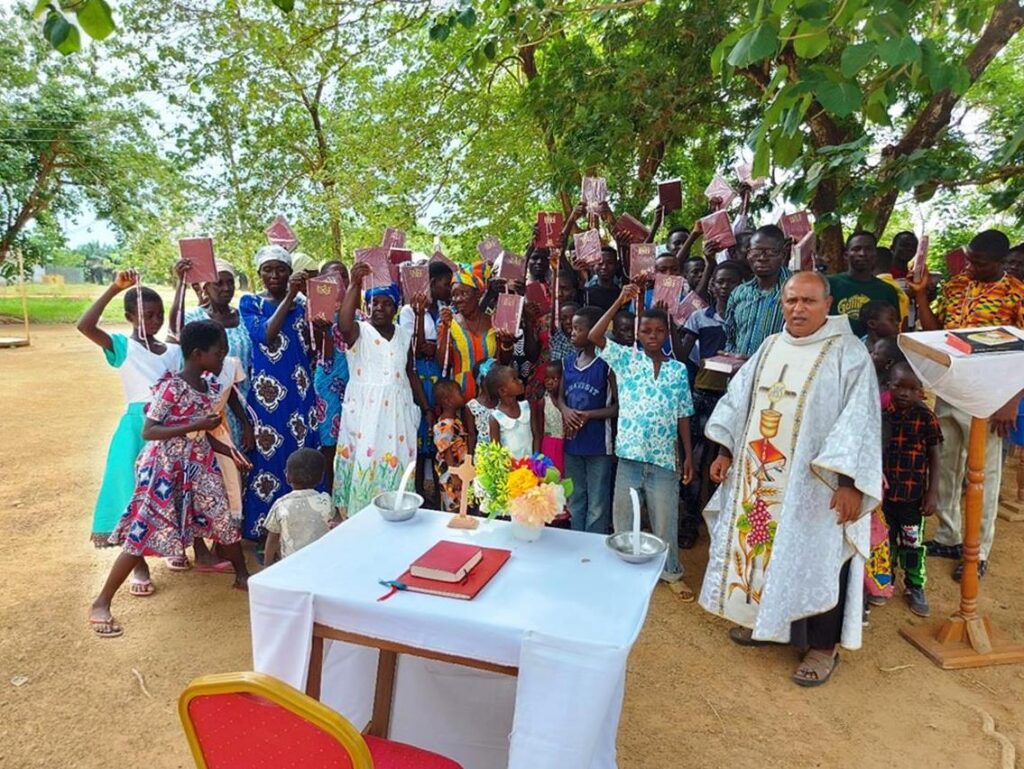
OUR PRESENCE In 2005, the Capuchin Province of St. Francis of Assisi in Kerala, India, answered a call from the Diocese of Novrongo-Bolgatanga in Ghana’s Upper East Region, establishing a mission there. Starting as a House of Presence, it officially became a Provincial Delegation in 2016 under Bro. Varghese Alphonse. After a three-year term, Bro. Varghese Alphonse was re-appointed in 2020, followed by Bro. Robinson Melkis’s appointment in 2022, marked the continued dedication of the Capuchins to their mission in Ghana. The political and ecclesial situation of Ghana is very healthy. The country is a peaceful democracy with regular elections. There was some unrest when new regions were created, but tensions have subsided. Ghana is predominantly Christian, with Catholicism being the largest single denomination. Religious tolerance is high, and missionaries are respected. The government recognizes the Catholic Church as a major contributor to healthcare and education. Evangelization in Ghana began with the arrival of SMA Fathers and Missionaries of Africa in the late 19th century. Since then, many missionary congregations have played important roles in spreading the faith. The Capuchins arrived in Ghana in 2005 and established communities in various locations.The Capuchins initially served in Kongo from 2005 to 2021, caring for the Spiritual Renewal Centre and Marian Grotto. The decision to leave Kongo was due to several factors, including lack of friars and limited opportunities for expansion. Then, in 2008, they established the Kpassa community and started to engage themselves actively in evangelization and development work. In 2018, they established a new community in Sunyani diocese, accepting the invitation of the Bishop of Sunyani to manage St. Joseph’s Retreat and Pastoral Centre. Three friars arrived in March 2018, residing temporarily in the Pastoral Centre until an old residential house of the Dioceses is renovated. Since the agreement made in 2020 with the Bishop allows them only a limited presence at the retreat center, they bought two acres of land in view of establishing their own fraternity house and school. Finally, after years of pursuit, the Capuchins officially started their mission in Accra Archdiocese in October 2020. The Archbishop welcomed them to manage St. John the Baptist Church at Prampram, Accra. Then in August 2022, they solidified their presence by signing an official contract with the Bishop. OUR ACTIVITIES Pastoral activities One of their biggest parishes is the one at Kpassa. Currently, the parish serves in addition to the main church 20 outstations in remote villages. Traveling to reach all outstations is a big challenge due to poor road conditions. Despite the challenges, the Capuchins are committed to serving the diverse needs of the communities. The pastoral service includes YOUFRA (KCYM), which is a vibrant youth ministry that fosters faith, fellowship, and service through various activities like playing various games through which the spreading of the Franciscan values and engaging with other communities are practiced; distributing over 4500 Bibles and thousands of rosaries and other items; building proper churches in various villages to enable communities to worship and grow together. Social activities Recognizing the importance of holistic development, the Capuchins provide various social services like provision of access to clean water by digging boreholes and corn mills for the ease of food preparation; distribution of clothes; provision of bicycles and umbrellas to enable easier travel; provision of educational materials; provision of medical needs (when possible); building homes for the poorest families; food assistance (in times of need); provision of sewing machines, provision of machines for fishing are some of them. The social activities of the brothers are not limited to addressing the basic needs, but they go further to provide services of education. They have already established four schools: IMPACTS The impacts of the Capuchin mission on the society is very significant. To mention some of them: CHALLENGES There are lots of challenges that each brother is facing each day; however, the pertinent and common challenges are: NUMBER OF FRIARS The Capuchin mission of Ghana is currently comprises thirteen friars, all hailing from St. Francis Province, Kerala, India. The friars are distributed across three communities; though we had four communities, the first community was closed due to inadequate friars: Contact person: Br. Robinson Melkis OFM Cap. (Mission Delegate- Ghana) Addresses: Mary Queen of Angels Provincial Delegation – GHANA (St. Francis Province, Kerala, India) P.O. BOX – 48, Nkwanta, Oti Region, Ghana TEL:  +233-242627462; Email: ofmcapghana@gmail.com August 11, 2025 By Br. Robinson Melkis OFM Cap

WITNESSING FRANCISCAN CAPUCHINS VALUES AMONG THE GHANAIANS: History, Activities and Evangelization Work of the Franciscan Capuchins in Ghana Read More »

LUNG OF THE ETHIOPIAN CATHOLIC CHURCH: The Service of the Capuchin Franciscan Institute of Philosophy and Theology (CFIPT) for the Past Four Decades

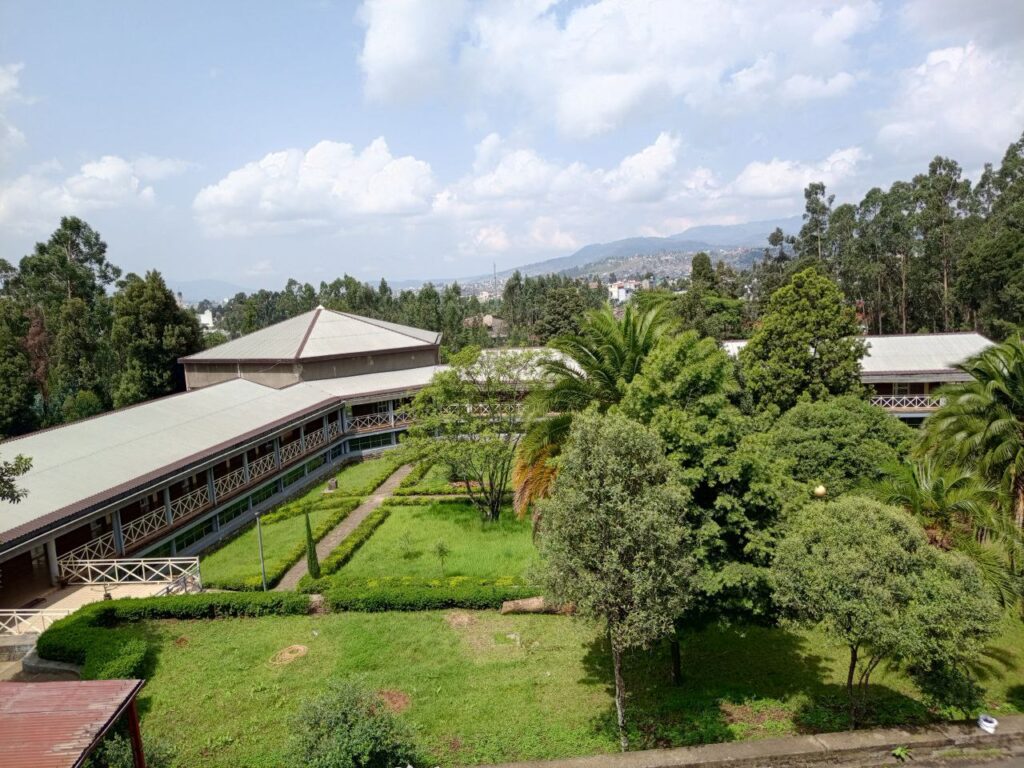
HISTORY The Institute of Philosophy and Theology at St. Francis’ Friary, Addis Ababa, Ethiopia is located in the North-West of Addis Ababa, on the way to Ambo, at about 8 km from the city centre (Municipality). The Institute was opened in 1970 as a Franciscan Capuchin Friars’ House of Philosophy. It replaced the “Studium Philosophicum” of Dekemehare, Eritrea. Up to 1979, the House of Philosophy provided a three-year Philosophy course only for Franciscan Capuchin candidates. Italian was the teaching language. At the completion of the three-year Philosophy course, candidates were sent to Asmara for their theological training. In 1979, however, in a spirit of cooperation and mutual advantage, the House of Philosophy was made available for all religious and clergy who wished to send their candidates for philosophical training. At the same time, every care was taken in order to improve the standard both in terms of personnel and library facilities. The Arch-Diocese of Addis Ababa, the Vicariate of Nekemte, the Lazarist Fathers and the Capuchins were first to welcome the offer and send their candidates. At the same time, they provided the House of Philosophy with competent lecturers. English became the teaching language and a two-year Philosophy course was proposed as a first step towards full cooperation. As the experiment proved successful, cooperation was extended further to include a four-year Theology Program in 1981. The House of Philosophy eventually became a centre of Philosophical and Theological Studies for all ecclesiastical circumscriptions in Ethiopia except Adigrat. Till 1994, the infrastructure used as class rooms and library was the building constructed for the formation of the Capuchin Seminaries; however, since the number of the students was growing year after year, it was needed to build a new block. The construction of the new block was started in 1993 fully funded by the OFM Cap Curia. The first phase was completed in 1994 and made ready for the academic year of 1994/95. Currently, more than ten dioceses and eleven religious congregations are sending their candidates to the institute for priestly and religious formation. In order to improve the standard of the Institute, a Propaedeutic Year was also introduced with the specific purpose of teaching the candidates the English language and other introductory subjects. PURPOSE The purpose of the Institute can be summed up into the following nine categories: ADMINISTRATION COURSES OFFERED IN CFIPT AND ACADEMIC YEAR IMPACTS The impact of the institute on the Ethiopian Catholic Church as well as the entire educational system of the country is paramount. Basically, it is one of the few institutes where the philosophical and theological disciplines are studied. Therefore, any clerical as well as civilian person who wants to study those fields is welcomed. Above all, except for the Eparchy of Adigrat, all the dioceses and most of the religious congregations are sending their students for philosophical and theological studies to this institute. That means, almost more than seventy-five percent of the Ethiopian priests are trained in this institution and all the young bishops who have been appointed in the past ten years, namely Bishop Markos, Vicar Apostolic of Jima Bonga; Bishop Lissanu-Chiristos Matewos, Eparchy of Bahirdar Dessie; Bishop Syum Franso, Vicar Apostolic of Hossana; Bishop Lukas Fikre, Eparchy of Emdibir; Bishop Dejene Hidoto, Vicar Apostolic of Soddo; Bishop Getahun Fanta, Vicar Apostolic of Nekemte; Bishop Merhakristos Gobezayehu Getachew, Vicar Apostolic of Hawassa; and Bishop Tesfaye Tadesse, Auxiliary Bishop of Archdiocese of Addis Ababa, are the fruits of this institutions. FUTURE PLAN As with the theological department, the institute plans to elevate the philosophical department to the first degree level by partnering with one of the Pontifical Universities. In addition to upgrading the philosophy department, it also plans to begin teaching students about Franciscan spirituality and Ethiopian literature. Contact person:  Br. Worku Yohannes (Provincial minister) Addressee:         P.O. Box 177                            Holy Savior Catholic Church                            Addis Ababa – Ethiopia                            ethiocapcuria@gmail.com August 11, 2025 By Br. Worku Demeke
LUNG OF THE ETHIOPIAN CATHOLIC CHURCH: The Service of the Capuchin Franciscan Institute of Philosophy and Theology (CFIPT) for the Past Four Decades Read More »