HISTORY
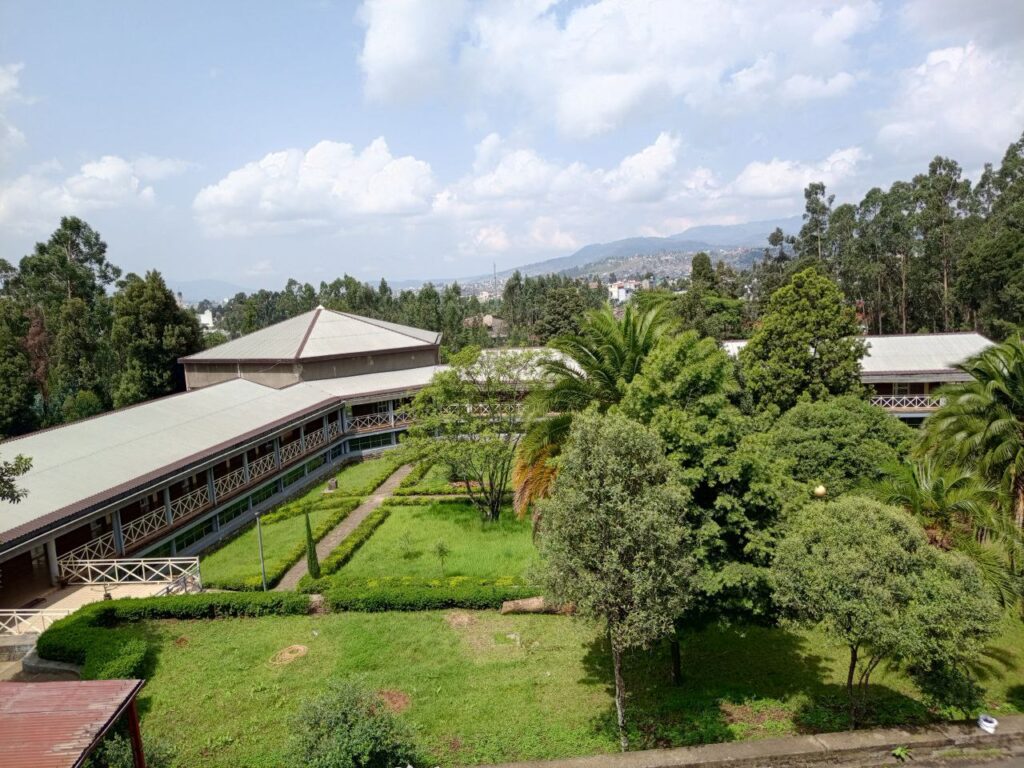
The Institute of Philosophy and Theology at St. Francis’ Friary, Addis Ababa, Ethiopia is located in the North-West of Addis Ababa, on the way to Ambo, at about 8 km from the city centre (Municipality). The Institute was opened in 1970 as a Franciscan Capuchin Friars’ House of Philosophy. It replaced the “Studium Philosophicum” of Dekemehare, Eritrea. Up to 1979, the House of Philosophy provided a three-year Philosophy course only for Franciscan Capuchin candidates. Italian was the teaching language. At the completion of the three-year Philosophy course, candidates were sent to Asmara for their theological training.
In 1979, however, in a spirit of cooperation and mutual advantage, the House of Philosophy was made available for all religious and clergy who wished to send their candidates for philosophical training. At the same time, every care was taken in order to improve the standard both in terms of personnel and library facilities. The Arch-Diocese of Addis Ababa, the Vicariate of Nekemte, the Lazarist Fathers and the Capuchins were first to welcome the offer and send their candidates. At the same time, they provided the House of Philosophy with competent lecturers. English became the teaching language and a two-year Philosophy course was proposed as a first step towards full cooperation.
As the experiment proved successful, cooperation was extended further to include a four-year Theology Program in 1981. The House of Philosophy eventually became a centre of Philosophical and Theological Studies for all ecclesiastical circumscriptions in Ethiopia except Adigrat. Till 1994, the infrastructure used as class rooms and library was the building constructed for the formation of the Capuchin Seminaries; however, since the number of the students was growing year after year, it was needed to build a new block. The construction of the new block was started in 1993 fully funded by the OFM Cap Curia. The first phase was completed in 1994 and made ready for the academic year of 1994/95. Currently, more than ten dioceses and eleven religious congregations are sending their candidates to the institute for priestly and religious formation. In order to improve the standard of the Institute, a Propaedeutic Year was also introduced with the specific purpose of teaching the candidates the English language and other introductory subjects.
PURPOSE
The purpose of the Institute can be summed up into the following nine categories:
- To form the students as human beings by sharpening their judgment and refining their appreciation of the wisdom of the ancients and moderns (Ratio 70) with particular reference to Ethiopia.
- To lead the students to the acquisition of a solid and coherent understanding of man, the world, and God (Ratio 71).
- To help the students discern the truth, detect errors, and refute it (Ratio 72).
- To form true pastors of souls after the model of our Lord Jesus Christ, teacher, priest, and shepherd (OT 4).
- To cater for the Spiritual formation of the candidates (OT 9).
- To foster a spirit of ecumenism.
- 7. To help the candidates deepen their knowledge and appreciation of Ethiopian Culture and tradition.
- To promote study, research and publications of Christian philosophical and Cultural literature in Ethiopia.
- To foster a spirit of cooperation among religious, Clergy and laity in the field of formation.
ADMINISTRATION
- Governing Board: the governing board consists of nine bodies, namely the president, the vice president, the rector, the vice rector, Dean of Philosophy, Dean of Theology, Head of Library, Spiritual director, and Secretary.
- President: The General Minster of OFM Cap
- Vice President: The provincial minister of the Capuchin Province of Ethiopia, Mary “Kidanemihret”
- Rector, vice rector and treasurer: qualified member of the Capuchin Province of Ethiopia or from any other circumscriptions of the Order.
- Dean of Philosophy: any priest who is lecturing in the Institute.
- Dean of Theology: any priest who is lecturing in the Institute.
- Head of Library: qualified member of the Capuchin Province of Ethiopia or from any other circumscriptions of the Order.
- Spiritual director: any priest who is lecturing in the Institute.
- Secretary: any qualified person.
- Associate Members: There are twenty-one associate members, of which ten are dioceses and eleven are religious congregations..
- Executive Board: the total members of the executive board are seventeen, of which eight are the representatives of the eight dioceses and nine are the representatives of the nine religious congregations.
- Academic Council (Teaching staff): the academic council varies from year to year; however, it is between thirty-five to forty.
COURSES OFFERED IN CFIPT AND ACADEMIC YEAR
- The Capuchin Franciscan Institute of Philosophy and Theology [CFIPT] offers courses leading to the award of:
- A Bachelor’s Degree in Theology (4 years) given by the Urbaniana Institute,
- A Diploma in Theology (4 years, including the Diploma in Philosophy) given by St-Francis Institute,
- A Diploma in Philosophy (3 years) given by St-Francis Institute
- A Diploma in Religious Studies (3 years) given by St-Francis Institute
- Academic Year: The academic year is divided into two semesters: I Semester: October to the end of January; II Semester: February to the end of June.
IMPACTS
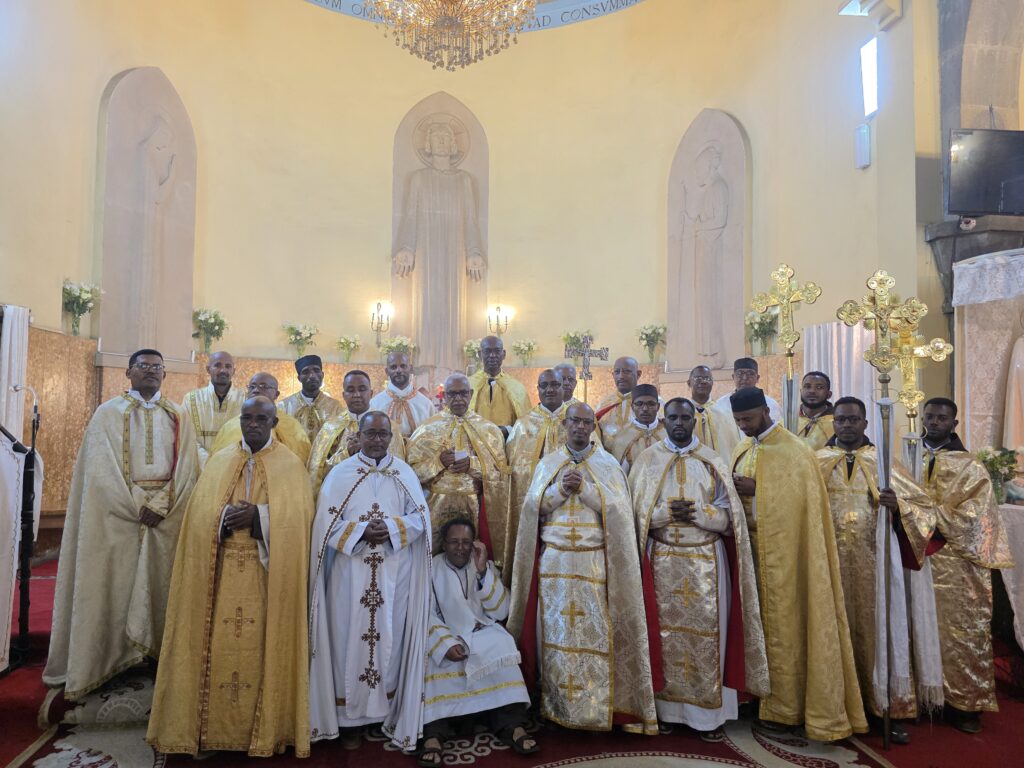
The impact of the institute on the Ethiopian Catholic Church as well as the entire educational system of the country is paramount. Basically, it is one of the few institutes where the philosophical and theological disciplines are studied. Therefore, any clerical as well as civilian person who wants to study those fields is welcomed. Above all, except for the Eparchy of Adigrat, all the dioceses and most of the religious congregations are sending their students for philosophical and theological studies to this institute. That means, almost more than seventy-five percent of the Ethiopian priests are trained in this institution and all the young bishops who have been appointed in the past ten years, namely Bishop Markos, Vicar Apostolic of Jima Bonga; Bishop Lissanu-Chiristos Matewos, Eparchy of Bahirdar Dessie; Bishop Syum Franso, Vicar Apostolic of Hossana; Bishop Lukas Fikre, Eparchy of Emdibir; Bishop Dejene Hidoto, Vicar Apostolic of Soddo; Bishop Getahun Fanta, Vicar Apostolic of Nekemte; Bishop Merhakristos Gobezayehu Getachew, Vicar Apostolic of Hawassa; and Bishop Tesfaye Tadesse, Auxiliary Bishop of Archdiocese of Addis Ababa, are the fruits of this institutions.
FUTURE PLAN
As with the theological department, the institute plans to elevate the philosophical department to the first degree level by partnering with one of the Pontifical Universities. In addition to upgrading the philosophy department, it also plans to begin teaching students about Franciscan spirituality and Ethiopian literature.
Contact person: Br. Worku Yohannes (Provincial minister)
Addressee: P.O. Box 177
Holy Savior Catholic Church
Addis Ababa – Ethiopia
August 11, 2025
By Br. Worku Demeke